The honest answer is no — you don't need one. But serious lifters use them for the same reason serious drivers wear seatbelts. Not because something will definitely go wrong. Because when it does, the margin matters.
DeadliftBelt TechniqueSpinal SafetyPowerlifting India
Deadlift & Belt
The Complete Answer — No Fluff
WHAT A BELT ACTUALLY DOES FOR YOUR DEADLIFT
Most lifters either belt up on every warm-up set or never use one at all. Both approaches are wrong. Here is the precise answer based on biomechanics, not gym folklore.
The question gets asked constantly — by beginners who have just watched their first powerlifting meet, by intermediate lifters chasing a new deadlift PR, and by experienced athletes unsure whether they're using their belt correctly. The straight answer: no, you do not need a lifting belt for deadlifts. But if you pull heavy regularly and you want to do it safely for years, you will eventually want one — and the difference it makes to your numbers is not small.
A lifting belt works by giving your core something rigid to brace against. When you take a big breath and create intra-abdominal pressure — the Valsalva manoeuvre — the belt becomes a second wall for your muscles to push into. This increases spinal stability, reduces the shear forces on your lumbar vertebrae, and allows you to generate more force through the entire pull. Research consistently shows lifters pull 5–15% more with a belt than without at the same perceived effort level.
The spine is most vulnerable during the deadlift at two points: the initial break from the floor, where the bar is furthest from your centre of mass and spinal loading peaks, and lockout, where aggressive hip extension creates lumbar hyperextension forces. A properly fitted 13mm lever belt addresses both — but only if you know how to brace against it correctly.
The Core Principle
The belt does not brace for you. You brace against the belt. A lifter who cannot brace properly without a belt will not suddenly brace correctly with one. Spend your first 6–12 months training beltless to build genuine core strength and bracing mechanics. Then the belt amplifies what you already have.
The most common mistake Indian gym lifters make is treating the belt as a safety net they strap on whenever the weight feels heavy. This creates two problems: it prevents the core from developing under real load, and it gives a false sense of security on weights that your bracing technique cannot actually support. Use the belt as a performance tool, not a crutch. That distinction changes everything about how you progress.
"A 13mm lever belt on a 200kg deadlift is not optional equipment. It is the difference between a successful lift and a spinal injury that ends your training for six months."
— NBD Powerlifting
Belt vs No Belt — Performance Numbers
Beltless 1RM baseline: 100% With 10mm belt: ~105–108% With 13mm lever belt: ~108–115% Break-even point for belt use: ~80% of 1RM
Below 80% — go beltless. It builds raw strength.
Above 80% — belt up. It protects and performs.
The Protocol
EXACTLY WHEN TO BELT UP FOR DEADLIFTS
01
Working Sets Above 80% of Your 1RM
This is the standard rule used by every serious powerlifting coach. Below 80%, the spinal load is manageable without additional support and training beltless builds stronger raw bracing. Above 80%, the forces on the lumbar spine increase sharply enough that belt use becomes smart training, not laziness.
02
Any Set at RPE 7 or Higher
If you use RPE-based training, belt up when your sets reach RPE 7 — that means 3 reps or fewer left in reserve. This is the point where intra-abdominal pressure becomes a meaningful factor in both performance and injury prevention.
03
All Competition Attempts
In competition, you belt for every attempt — opener, second, and third. There is no reason to pull beltless on a competition platform. Your training should reflect this: if you plan to compete belted, your heavy training sets should also be belted so your body is adapted to the specific bracing mechanics.
04
Deficit Deadlifts and Romanian Deadlifts at Heavy Loads
Both variations increase the range of motion and time under spinal load compared to conventional deadlifts. Belt up for any heavy set of these movements — the spinal loading is typically higher than a standard deadlift at the same absolute weight because of the extended lever arm and ROM.
05
When You Are Fatigued Late in a Session
Fatigue degrades bracing quality. If your deadlift work comes late in a long session after squats and accessory work, even sub-maximal weights can become risky because your core is already compromised. In these situations, belt up at a lower threshold — RPE 6 rather than RPE 7 — to compensate for accumulated fatigue.
06
When You Are NOT a Beginner
If you have less than 6–12 months of consistent training, hold off. Beginners cannot accurately assess their own bracing quality, and introducing a belt too early masks the development of the core strength you need. Train beltless, master the Valsalva manoeuvre, and earn the belt through strength — then it becomes a genuine tool.
07
Volume Sets: Belt for Quality, Not Just Max Weight
Many lifters only belt their top sets. A more complete approach: belt your top set AND any back-off sets where fatigue means your final reps approach RPE 8. High-rep deadlift sets with a belt teach your body to maintain bracing quality under metabolic fatigue — a skill that transfers directly to competition performance.
The Right Belt for Deadlifts
WHY A 13MM LEVER BELT IS THE CORRECT CHOICE FOR HEAVY PULLS
13
Maximum Stiffness = Maximum Support
The 13mm thickness provides full competition-spec rigidity. For deadlifts specifically, a stiffer belt gives the core more resistance to push against during the initial pull — the point of maximum spinal loading. A thinner or softer belt compresses under load and loses effectiveness precisely when you need it most.
3s
Lever Release Between Sets
The dual pro lever mechanism releases in under 3 seconds between sets. For deadlift training specifically — where you pull multiple heavy singles or back-off sets with short rest — the ability to loosen the belt completely between attempts and re-tighten to the exact same position every time is a significant performance and comfort advantage over prong belts.
10
Full 10cm Width — Uniform Support
The 10cm uniform width wraps the entire lower back and anterior core simultaneously. Unlike tapered belts that are wider at the back than the front, a uniform-width powerlifting belt provides 360-degree bracing surface — critical for deadlifts, where the anterior core must resist spinal flexion throughout the entire pull from floor to lockout.
MEET
Competition Specification From Day One
The NBD 13mm Dual Pro is built to standard competition specifications for thickness and width. Train in the belt you will compete in — this matters more than most lifters realise. A belt that fits and performs differently in competition compared to training creates a variable that experienced athletes actively avoid. One belt, all sessions, all meets. Always confirm your own federation's current equipment rules before competition day.
Technique
Belt Placement for Deadlifts
HOW TO POSITION YOUR BELT FOR DEADLIFTS
Most lifters who own a belt place it incorrectly. Belt position for deadlifts is slightly different from squat belt position — and the difference affects both comfort and performance.
For squats, most lifters position the belt at the natural waist — directly between the lower ribs and the top of the hip bones. For deadlifts, many experienced pullers move the belt fractionally lower, with the bottom edge of the belt sitting just above the iliac crest. This small adjustment prevents the belt from digging into the hip crease when you hinge forward at the bottom of the pull.
The tightness protocol for deadlifts differs slightly from squats as well. For squats, you want the belt cinched so you can fit two fingers between the belt and your skin when breathing out. For deadlifts, some lifters prefer the belt half a notch looser than their squat setting — tight enough to brace against firmly, loose enough that the buckle does not dig into the hip crease during the initial hinge. Experiment in training sessions rather than discovering this at your first meet.
The Lever Belt Advantage Here
Because a lever belt cinches to the exact same hole position every time, you can identify your optimal deadlift belt setting once and replicate it perfectly for every subsequent session. Mark your lever position with a small piece of tape during your first few sessions as a reference while you calibrate. Prong belt users cannot do this — the tightness varies slightly every set.
When you step up to the bar, tighten the belt before you set your back position — not after. Many lifters make the mistake of getting into their deadlift setup and then trying to fasten the belt while bent forward. Fasten first, set up second. Take your big breath, brace hard against the belt so you feel the entire circumference of the belt engage, then break the floor. The brace should happen before any movement begins — not as the bar starts moving.
Belt Setup Checklist for Every Deadlift
Step 1: Fasten belt before approaching the bar Step 2: Position belt just above hip bones (for deadlifts) Step 3: Check tightness — 2-finger gap when exhaled Step 4: Stand over the bar, hinge to grip position Step 5: Take a big breath INTO your belt (360 degrees) Step 6: Hold that brace and break the floor Step 7: Maintain brace until the bar is fully locked out Step 8: Exhale and re-breathe only after the weight is secured or set down
For lever belts: release fully between heavy singles for CNS reset, or keep it on for back-off sets with shorter rest.
You do not need one, but serious lifters use one for good reason. A lifting belt increases intra-abdominal pressure, stabilises the spine under heavy load, and allows you to generate more force through the pull. Most powerlifters belt up for any deadlift above 80% of their 1RM. If you are new to training, build raw core strength first for 6–12 months, then introduce a belt as a performance tool on your heavy working sets.
No. Belt your working sets at RPE 7 or higher — sets where the weight is genuinely challenging. Warm-up sets and lighter technique work should stay beltless. This builds both belted strength and raw bracing ability. Going beltless on lighter sets also develops the core musculature more completely than always training with a belt, making you stronger in both positions over time.
For maximum deadlift performance, yes. A 13mm belt is stiffer and provides a harder surface to brace against, increasing intra-abdominal pressure more effectively. The trade-off is a longer break-in period — expect 3–6 weeks of regular use before a 13mm belt moulds to your body. Most competitive powerlifters and serious gym lifters choose 13mm for all heavy compound work. If you want to read the full breakdown, see our 10mm vs 13mm guide.
Position the belt between your lower ribs and hip bones — at your natural waist. For deadlifts specifically, many experienced lifters wear the belt fractionally lower than for squats, with the bottom edge sitting just above the iliac crest. This prevents the belt from digging into the hip crease at the bottom of the pull. Fasten the belt before you approach the bar, not after you are already in your setup position.
A lever belt is better for deadlift training if you pull multiple heavy sets in a session. The lever mechanism allows you to replicate the exact same tightness on every single set — something a prong belt physically cannot do — and releases in under 3 seconds between attempts. The consistency of tightness matters for deadlifts where bracing position and setup are critical. The only time a prong belt makes sense is if you frequently need to adjust tightness mid-session, which most lifters do not.
PULL HEAVIER. STAY SAFE.
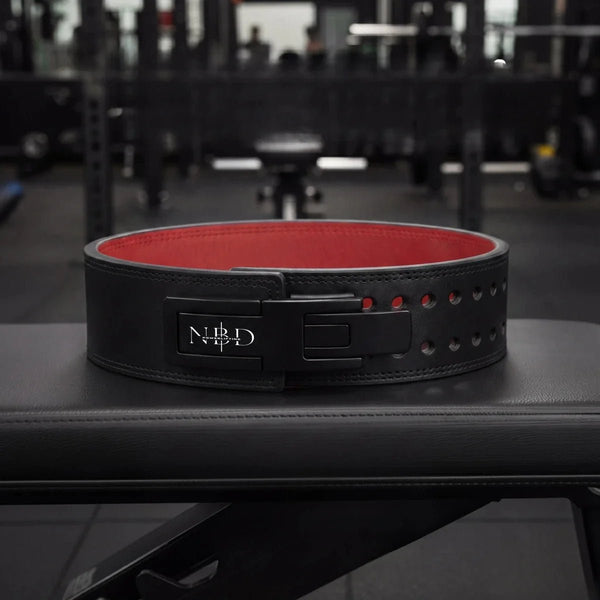
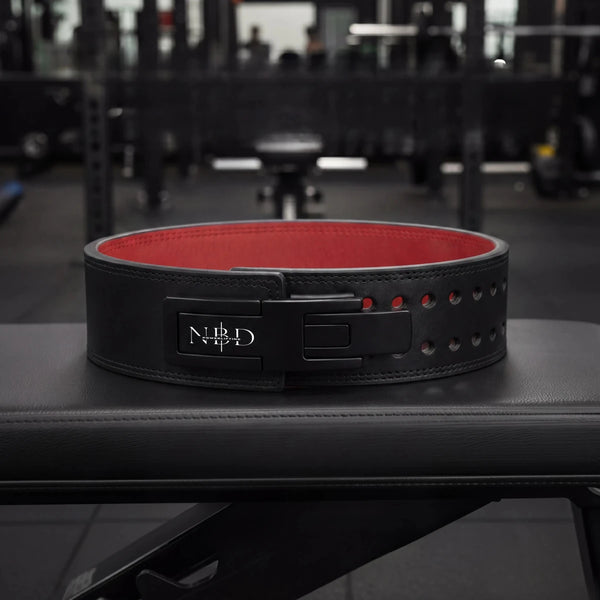
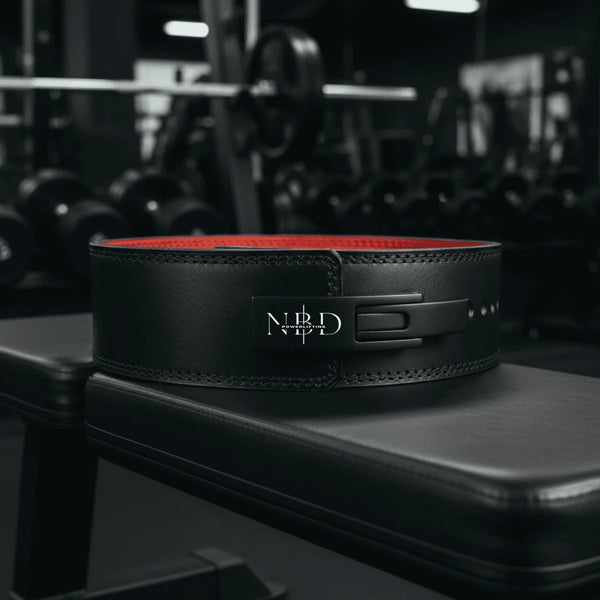
The NBD 13mm Dual Pro Lever Belt is built for exactly this — maximum support on your heaviest deadlifts, lever release between sets, competition specification from day one. Trusted by serious lifters across India.
NBD Powerlifting is an Indian manufacturer of competition-grade powerlifting equipment — lever belts, knee sleeves, wrist wraps and lifting straps — serving 15,500+ lifters across India. Written by Karman Singh, who founded NBD in Sirsa, Haryana in 2014.
The NBD Belts
The gear this guide is written about. Built and shipped from India.
Cash on Delivery is available. COD charges are extra — they
are not part of the price on the product page and are added at checkout, on
top of your order value.
COD charge by order value
Order value
COD charge
Up to ₹3,000
₹250
₹3,001 – ₹5,000
₹400
₹5,001 – ₹7,000
₹600
₹7,001 – ₹10,000
₹800
₹10,001 – ₹15,000
₹1,200
₹15,001 – ₹20,000
₹1,500
₹20,001 – ₹30,000
₹2,000
Above ₹30,000
On WhatsApp
How a COD order is processed
Your order is confirmed on WhatsApp.
Once you place a COD order our team messages you on WhatsApp to confirm the
item, the size and the delivery address.
The COD charge is paid in advance, as the shipping charge.
Only the COD charge shown above is paid upfront. The rest of your order
value is still paid in cash to the courier at your door.
Unpaid COD shipping is cancelled within 24 hours.
If that advance shipping payment does not reach us within 24 hours of the
WhatsApp confirmation, the order is cancelled.