

RPE: THE TOOL
EVERY SERIOUS
LIFTER NEEDS TO
MASTER
Most lifters train by feel without knowing it. RPE gives that feeling a number — and that number changes everything about how you progress, recover, and peak for competition.
The One-Line Answer
RPE stands for Rating of Perceived Exertion, and in powerlifting it runs on a 1–10 scale where each number maps to how many reps you had left after a set: RPE 10 means you could not have done another rep with good form, RPE 9 means one rep left, RPE 8 means two. You use it by finishing a set and asking honestly how many more reps you could have completed with good form. It exists because a percentage is built on a one-rep max you tested weeks ago under different conditions — percentages assume you are always the same athlete, and RPE acknowledges that you are not. The goal is not to train as hard as possible every session; it is to train at the right intensity for where you actually are today.
RPE IN POWERLIFTING:
THE COMPLETE GUIDE TO
RATING OF PERCEIVED EXERTION
Most lifters train by feel without knowing it. RPE gives that feeling a number — and that number changes everything about how you progress, recover, and peak for competition.
It is a Tuesday evening training session. You loaded 160kg on the bar for your working squat sets — the same weight you moved smoothly last week. But tonight every rep feels heavier than it should. Your sleep was poor. Your nutrition was off. Your body is talking to you. The question is: are you listening? This is exactly what RPE was built for — to give you a language for what your body is telling you, so your training works with your biology instead of fighting it.
Most Indian lifters follow percentage-based programs: 75% on Monday, 80% on Wednesday, 85% on Friday. The problem is that those percentages are based on a one-rep max you tested weeks ago, under specific conditions, on a specific day. Percentages assume you are always the same athlete. RPE acknowledges that you are not. Your nervous system, sleep, hydration, stress, and nutrition all change the weight you can move on any given day. A weight that is 80% of your max one week might feel like 87% the next.
RPE stands for Rating of Perceived Exertion. In powerlifting, it operates on a 1-10 scale where each number maps directly to how many reps you had left in the tank after a set. This concept, popularised for strength training by world-class powerlifter Mike Tuchscherer in his Reactive Training Systems manual, fundamentally changed how elite athletes program their training. When you complete a set of squats and ask yourself "how many more reps could I have done with good form?" — you are using RPE. The goal is not to train as hard as possible every session. The goal is to train at the right intensity for where you actually are today.
At NBD Powerlifting, we gear up over 15,500+ serious lifters across India. The ones who make consistent progress year after year are not the ones who go hardest every session — they are the ones who know when to push and when to hold back. RPE is the tool that makes that distinction precise. Pair it with a quality leather belt that lets you brace hard and consistent, and you have the foundation of intelligent, sustainable strength training.
RPE is not about training easy. It is about training at the right intensity for your actual state on that day. Some days that means going heavier than planned. Most days it means being honest about where you are.
"The bar doesn't know what day it is. But your body does — and RPE lets you listen."— Karman Singh, NBD Powerlifting
THE RPE 1-10 SCALE EXPLAINED
| RPE | RIR | What It Feels Like | Best Used For |
|---|---|---|---|
| 10 | 0 |
Maximum effort. Could not have done another rep with good form. Bar speed is at its slowest. Competition / Testing Only |
1RM attempts, meet day openers, max testing. Avoid in regular training. |
| 9.5 | 0–1 |
Near max. Could have maybe done one more rep, but it would have been a grind. Technical form starting to break. Peak Phase |
Final heavy singles in competition prep. Not for weekly use. |
| 9 | 1 |
Very hard. Definitely 1 rep left. Bar moving slowly on the last rep. Mental effort very high. Heavy Top Sets |
Top sets in strength blocks. 1-2 times per week maximum per lift. |
| 8.5 | 1–2 |
Hard. Definitely 1 rep left, possibly 2. Bar speed slowing on final reps but form stays solid. Strength Training |
Primary work sets in strength-focused blocks. The sweet spot for building maximal strength. |
| 8 | 2 |
Challenging but controlled. Definitely 2 reps left. Last rep felt hard but technically clean. This is the most common training RPE for advanced lifters. Main Work |
Primary work sets, back-off sets after top sets. The most productive training zone for most lifters. |
| 7.5 | 2–3 |
Moderate-high. 2 reps left, maybe 3. Working hard but comfortable breathing throughout. Volume Work |
Volume blocks, accessory movements, technique work with moderate load. |
| 7 | 3 |
Moderate. 3 reps clearly left. Moving well. Good speed on the bar throughout all reps. Hypertrophy / Volume |
High-rep sets, hypertrophy-focused training, deload transition weeks. |
| 6 | 4 |
Comfortable. 4 or more reps left. Feels like warm-up weight. Used in deload weeks and technical work. Deload / Technique |
Deload weeks, movement pattern practice, warm-up sets. |
WHY IT ACTUALLY WORKS
RPE Correlates Directly With 1RM %
Research by Helms et al. found a significant correlation (r = 0.88 to 0.91) between RPE scores and the percentage of 1RM being lifted. RPE 10 on a set of 1 rep closely corresponds to roughly 100% of 1RM. RPE 8 on a triple corresponds to approximately 85-87%. This makes RPE a scientifically valid intensity measurement tool, not just guesswork.
Auto-Regulation Reduces Overtraining
Studies on auto-regulated training show that RPE-based programs produce superior strength gains compared to fixed percentage programs over 8-12 week training cycles. The reason is simple: on high-readiness days you can push harder than a percentage allows, and on low-readiness days you avoid accumulated fatigue that leads to overtraining and injury. Your nervous system recovery varies by up to 15% week to week.
Accuracy Improves With Experience
A study by Zourdos et al. comparing experienced and novice squatters found that experienced lifters were significantly more accurate at rating their proximity to failure (9.80 vs 8.96 at actual 1RM, p = 0.023). This means RPE is a skill — the longer you train with it, the more accurately you can use it, and the more precisely you can control training intensity over a season.
NBD GEAR FOR SERIOUS TRAINING


HOW TO USE RPE IN YOUR TRAINING
-
Rate Every Work Set Immediately
As soon as you re-rack the bar, before you unclip your belt or breathe out fully, ask yourself: "How many more reps could I have done with perfect form right now?" That number gives you your RIR, and the inverse gives you your RPE. Rating immediately prevents the brain from revising the score after rest.
-
Keep Most Volume at RPE 7–8
The majority of your weekly training volume should sit between RPE 7 and RPE 8. This is the zone where you accumulate enough training stress to drive adaptation without building excessive fatigue. Reserve RPE 9 and above for top sets and competition prep phases only.
-
Use RPE to Adjust Load on the Day
If your program calls for 4 sets at RPE 8 and your first set at your planned weight feels like RPE 9, drop the weight by 5-10% for the remaining sets. If it felt like RPE 7, add a small amount. This is auto-regulation working — you are responding to your actual readiness, not a number written weeks ago.
-
Track RPE Weekly to Spot Trends
If the same weight at the same reps starts requiring consistently higher RPE over multiple weeks, your fatigue is accumulating and a deload is needed. If RPE is consistently lower, you have adapted and it is time to progress load. RPE gives you a data point for this decision that percentage programs cannot.
FREQUENTLY ASKED
RPE stands for Rating of Perceived Exertion. In powerlifting it is a 1-10 scale where each number maps to how many reps you had left in reserve after completing a set — called Reps In Reserve (RIR). RPE 10 means absolute maximum effort with zero reps remaining. RPE 8 means you had 2 clean reps left. The system allows you to regulate training intensity based on how your body actually feels each day, rather than fixed percentages of your one-rep max. It was popularised for barbell sports by elite powerlifter Mike Tuchscherer and is now used by elite powerlifters worldwide.
For most of your strength training volume, work sets should sit between RPE 7 and RPE 8.5. This range — 1 to 3 reps in reserve — is where research shows the best combination of strength stimulus and manageable fatigue. RPE 9 top sets are appropriate once or twice per week during strength blocks. RPE 9.5 to 10 should be reserved for competition prep peaks and meet day itself. Training at RPE 9-10 every session significantly increases injury risk and the time needed to recover between sessions.
RPE (Rating of Perceived Exertion) and RIR (Reps In Reserve) measure the same thing from opposite directions. RPE counts up from 1 (very easy) to 10 (maximum effort). RIR counts down from how many reps you have left. They are directly related: RPE 8 equals RIR 2 (two reps left). RPE 9 equals RIR 1. RPE 10 equals RIR 0. Most modern powerlifting programs use RIR in the program prescription because it is more intuitive — "do 4 sets of 3 with 2 reps in reserve" is clearer than "do 4 sets of 3 at RPE 8."
Not as a primary intensity tool in the first 6-12 months. Beginners lack the proprioceptive experience to accurately judge how close to failure they are. A novice might stop at what genuinely feels like RPE 9 but actually had 4 or 5 reps remaining — this is not a weakness, it is simply lack of body awareness. Beginners are better served by linear progression and learning what true failure feels like on simpler movements first. Once you have consistent technique on the main lifts and a base of training history, RPE becomes an extremely powerful tool.
RPE and belt use are directly connected. Your belt should come on when your working sets reach RPE 7 or higher — the point where intra-abdominal pressure becomes a meaningful factor in spinal protection and performance. A quality leather belt like the NBD 13mm lever belt allows you to brace maximally against it, which actually changes how a given weight feels and therefore affects your RPE. Experienced lifters often find that belted RPE runs approximately 0.5-1 point lower than unbelted at the same weight, because the belt supports the brace. This is useful data for programming both belted and unbelted work.
RPE is a skill, and it is easier to calibrate with a second, trained pair of eyes than in isolation. An NBD strength assessment reviews your actual lifts on video against a coach's checklist — a starting point if you want to know whether your RPE numbers match what is actually happening on the bar.
TRAIN SMARTER.
LIFT HEAVIER.
RPE tells you how hard to push. NBD gear gives you the support to push that hard safely. Competition-standard leather belts, knee sleeves, wrist wraps, and lifting straps — engineered in India for serious lifters.
Shop NBD Powerlifting Gear →The gear this guide is written about. Built and shipped from India.
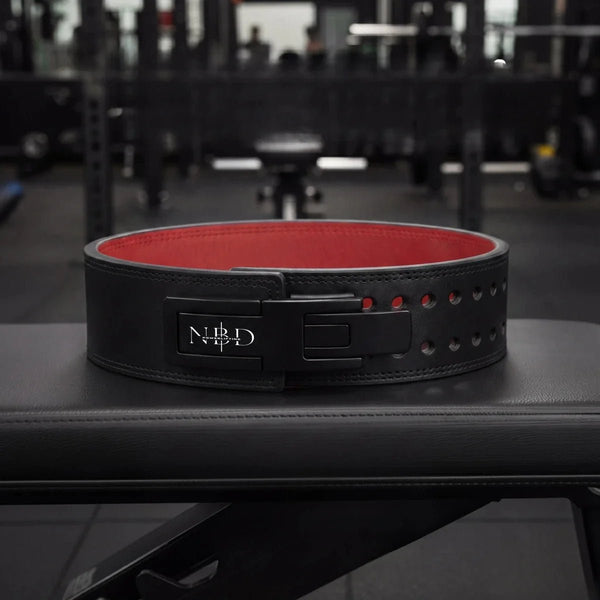 NBD Dual Pro Lever Belt (10mm & 13mm)Weightlifting Belt
View product
NBD Dual Pro Lever Belt (10mm & 13mm)Weightlifting Belt
View product
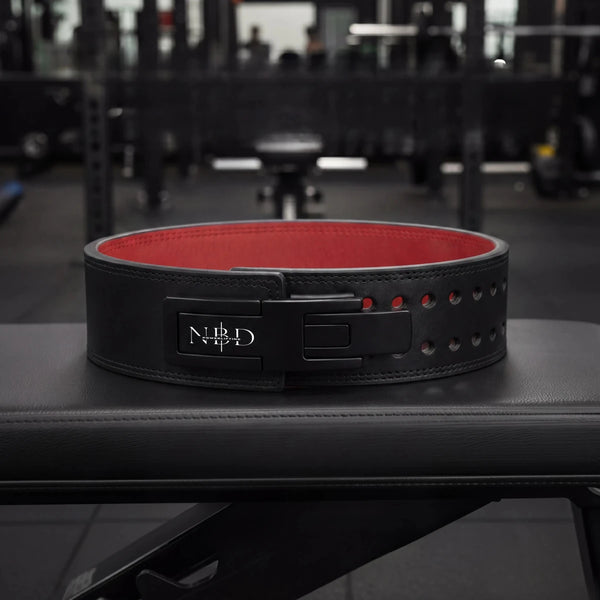 NBD 13mm Dual Pro Lever Belt – Elite Powerlifting Belt | Premium LeatherPowerlifting Belt
View product
NBD 13mm Dual Pro Lever Belt – Elite Powerlifting Belt | Premium LeatherPowerlifting Belt
View product
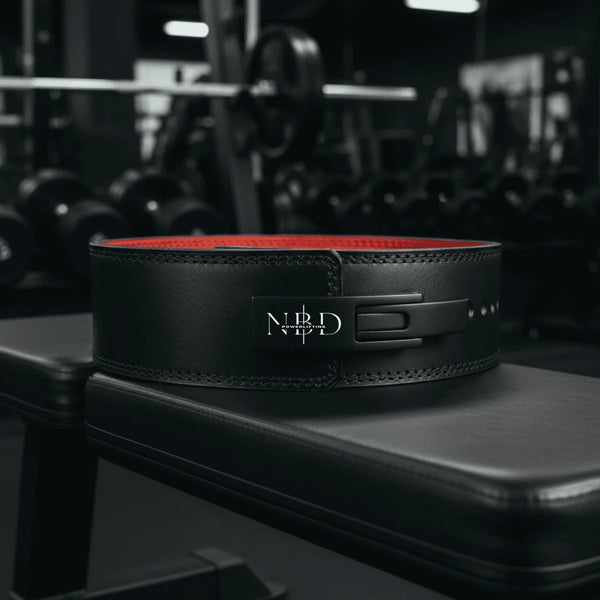 NBD 10mm Lever Belt – Premium Leather | Choose from all Classic, Dual Pro, Gold Lever VariantsPowerlifting Belt
View product
NBD 13mm Lever Belt – Premium Leather | Choose from all Classic, Dual Pro, Gold Lever VariantsPowerlifting Belt
View product
NBD 10mm Lever Belt – Premium Leather | Choose from all Classic, Dual Pro, Gold Lever VariantsPowerlifting Belt
View product
NBD 13mm Lever Belt – Premium Leather | Choose from all Classic, Dual Pro, Gold Lever VariantsPowerlifting Belt
View product
READY TO GEAR UP?
Shop India's most trusted powerlifting equipment — built for serious lifters.