Both of these exist to solve one problem: your grip giving out while your back still has reps left. They solve it in completely different ways, and the difference matters more than the shelf they share suggests.
The One-Line Answer
Buy straps. Buy hooks instead if your hands genuinely cannot do the job — an injury, a thumb problem, or pulling volume so high that grip fails long before the muscle does.
What Each One Actually Does
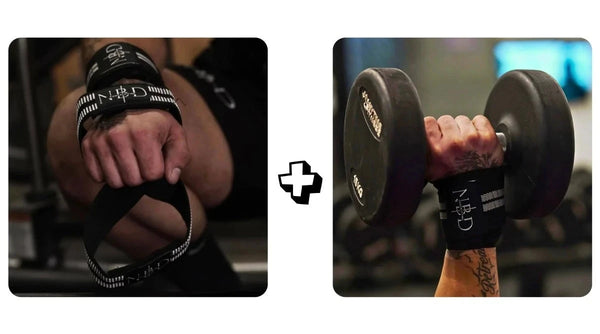
A lifting strap is fabric wound around the bar that you then grip over. Your hand still closes. The strap stops the bar rotating out of your fingers, but you are still holding it, so you keep a real sense of where the bar is and what it is doing.
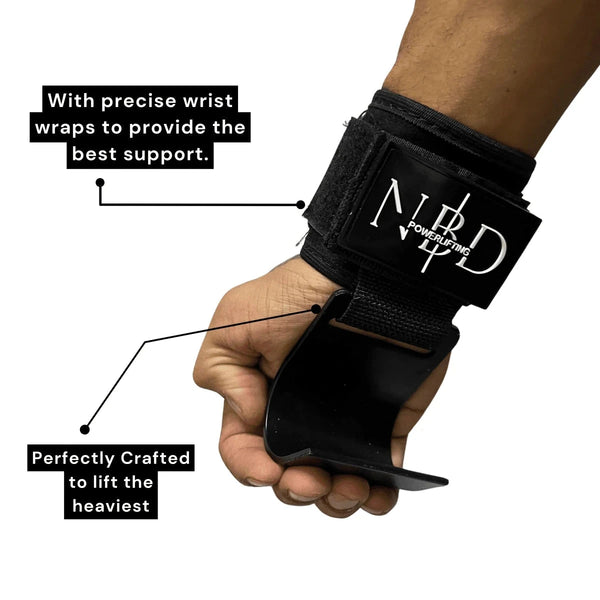
A hook grip — the equipment, not the thumb-under hook grip technique, which is a different thing entirely — is a steel hook on a padded wrist cuff. The bar sits in the hook. Your hand rests on top of it and contributes almost nothing. The load travels from the bar, through the hook, into the back of your wrist.
That is the whole distinction, and everything below follows from it.
Side by Side
| Factor | Lifting Straps | Hook Grips |
|---|---|---|
| Hand strength needed | Some | Almost none |
| Feel for the bar | Good | Poor |
| Speed to bail out | Fast | Slower |
| Where the load sits | Across the palm and fingers | Back of the wrist |
| Setup time | A few seconds, both hands | Quick, one hand at a time |
| Best for | Deadlifts, heavy pulls, general use | Rows, shrugs, pulldowns, high volume |
| Permitted in competition? | No | No |
When Hooks Are the Right Call
- You are training around a hand injury. A broken finger, a thumb problem, a healing forearm — hooks let you keep training your back when closing your hand is not an option. This is the clearest case for owning them.
- Your pulling volume is high. On sets of twelve to fifteen on rows or pulldowns, grip fails a long way before the lat does. Hooks remove that ceiling entirely.
- You cannot set a strap one-handed. Hooks go on faster and need less fiddling, which matters if you are cycling through a lot of pulling exercises.
- Sweaty hands in Indian summer. A strap still relies on friction. A hook does not care.
When Straps Are the Right Call
- You deadlift heavy. On a near-limit pull you want to be able to let go instantly. A closed hook is slower to escape.
- You want to keep some feel for the bar. Hooks make the bar feel remote, and plenty of lifters find their pulling technique drifts as a result.
- You want one tool that covers everything. Straps work on every pulling movement. Hooks are more specialised.
- Your wrists are the weak link. Hooks concentrate load on the back of the wrist. If that area already complains, straps spread it more kindly.
Neither Is Legal in Competition
Worth being clear about, because it shapes how you should train with them. The IPF Technical Rulebook lists permitted personal equipment in detail — belt, wrist wraps, knee sleeves, each with exact dimensional limits — and neither lifting straps nor hook grips appear on it at all. Every competition deadlift is pulled with your own hands.
If you compete, that means your strapped training max and your competition deadlift are two different numbers, and you need to know both. Pull raw often enough that the gap does not surprise you on the platform. Check your own federation's current rulebook, but expect the same answer.
The Grip Question, Answered Honestly
Neither of these makes your grip weaker. What makes your grip weaker is never loading it. A lifter who reaches for straps on their first working set every session simply never gives their hands a reason to adapt, and eighteen months later has a back their grip cannot express.
The pattern that works is the same either way: pull raw for as long as your hands hold, then strap or hook the volume work and the sets past that point. That gives your back the stimulus it came for and still leaves your grip something to do.
What to Look For
In a strap: length enough for two full wraps around the bar, a rigid surface that grips rather than slides as the set goes on, and stitching at the loop that is not going to be the first thing to fail. NBD lifting straps come in three shapes — Straight, Infinity 8 and Collar — with a white rubber covering that keeps them rigid on the bar.
In a hook: the cuff matters more than the hook. A narrow or thinly padded wrist cuff turns the whole load into a pressure line across the back of your wrist, which is unpleasant within a few sets. Look for a wide, padded cuff, industrial velcro, and steel rather than plated alloy. NBD Premium Power Hook Grips are built on steel hooks with a padded wrist wrap and heavy velcro.
Using Each One Properly
Straps: thread the tail through the loop, seat it on your wrist, pass the tail under and around the bar winding toward you, then roll the bar back to take up the slack before you grip over the top. Set both hands before you pull, not one on the way up.
Hooks: position the cuff so the hook sits square in line with your fingers, not angled across the palm. Load the bar into the hook and let your hand rest on top rather than squeezing — gripping hard defeats the point and tires the forearm you were trying to spare.
Making Them Last
Straps fail at the loop stitching, and damp storage accelerates it. Hooks fail at the velcro first and the stitching where the hook is anchored second. Air dry both after sweaty sessions instead of leaving them at the bottom of a gym bag, keep velcro closed in storage so it does not fill with lint, and check the anchor stitching on hooks every few months — that is the joint carrying your entire working weight.
Grip Support, Both Kinds
Straps in three shapes and steel hook grips with a padded cuff, manufactured by NBD. Trusted by 15,500+ lifters across India, with free pan-India shipping and COD available. Not sure which suits how you pull? Message the team and describe where your grip gives out.
SHOP NBD GRIP SUPPORT →Frequently Asked Questions
Are hook grips better than lifting straps?
Not better, more specialised. Hooks take the load onto steel instead of your fingers, so they need almost no hand strength — but you lose feel for the bar and the ability to bail out fast. Hooks earn their place when your hands genuinely cannot do the job.
Do hook grips hurt your wrists?
They can if the cuff is thin or badly padded, because the whole load transfers through the hook into the back of the wrist rather than across the palm. A wide padded cuff matters far more on hooks than on straps. A sharp pressure line rather than broad compression means the cuff is too narrow or sitting wrong.
Can you use either in a powerlifting competition?
No. The IPF Technical Rulebook lists permitted personal equipment in detail and neither straps nor hook grips appear on it. Every competition deadlift is pulled with your own hands. Both are training tools — check your own federation, but expect the same answer.
Which is better for deadlifts specifically?
Straps, for most lifters. On a maximal pull you want to drop the bar instantly if it goes wrong, and a closed hook is slower to escape. Hooks shine on rows, shrugs, rack pulls and high-volume back work where the bar is under more control.
Will using them make my grip weaker?
Not directly, but relying on them for everything stops your grip getting stronger, which comes to the same thing. Pull raw while your hands hold, then strap or hook the sets past that point.
Do I need both?
Most lifters do not. Straps cover the majority of situations and cost less, so start there. Add hooks if you are training around a hand injury, or your pulling volume is high enough that grip fails long before the muscle does.
Related reading: Wrist wraps vs lifting straps · Choosing your first powerlifting kit · NBD straps and hook grips · All NBD straps, wraps and sleeves