How to Choose Your First Powerlifting Kit: Belt, Sleeves & Wraps Explained
If you're new to powerlifting gear, buying piece by piece as problems come up is the expensive way to do it — you end up owning five half-right items instead of the two or three that actually matter. This guide breaks down exactly what each piece of gear does, what order to buy it in, and when a kit makes sense versus buying separately.
Walk into any serious lifter's gym bag and you'll find some combination of the same five items: a belt, knee sleeves, knee wraps, wrist wraps, and lifting straps. None of them are optional in the sense of "you'll get hurt without it" — people lift raw and beltless every day. But each one solves a specific, real problem, and knowing which problem you actually have is what separates a smart first purchase from a drawer full of gear you never use.
What Each Piece of Gear Actually Does
- Belt — core bracing for squat and deadlift. It gives your core a rigid surface to push against, which increases intra-abdominal pressure and spinal stability under load. This is the first thing to buy, and the highest-impact one by a wide margin. Read our full belt buying guide before you pick a thickness.
- Knee sleeves — joint support and mild compression on squats, plus warmth across long training sessions. A 7mm knee sleeve is the standard thickness for serious lifters. Sleeves are not the same as knee wraps — they don't add rebound, they add support and consistency.
- Knee wraps — far more aggressive rebound than sleeves, wrapped tight before a lift to store elastic energy out of the bottom of the squat. Used by raw-with-wraps and equipped lifters chasing maximum numbers. Not necessary, and often not ideal, for most beginner or intermediate raw lifters.
- Wrist wraps — wrist support for heavy bench press and overhead pressing. They stop the wrist from hyperextending under load, which matters most once your bench weight climbs past what your wrists can stabilise unassisted.
- Lifting straps — grip assistance for pulling movements, used once your grip gives out before your back or legs do. Rows, deadlift variations, and pulling-focused accessory work are where straps earn their place.
Kit vs Buying Separately — The Real Math
A bundle only makes sense if you actually need most of what's inside it. A kit built around 8-9 items you'll genuinely use is real value — you're not paying separate shipping and separate markups on each piece, and the belt is usually the same one sold standalone. But paying for wraps, hooks, or straps you'll never touch isn't a discount just because it came in a box together. That's clutter you paid for.
The honest way to decide: list what you'll actually use in the next 3-6 months of training. If that list has 4 or more items on it, a kit is very likely the better buy. If your list is just "a belt, maybe sleeves," buy those two things standalone and skip the bundle.
What Should Your First Kit Include?
If you're strictly a beginner — under a year of consistent training — start with a belt and knee sleeves. That covers the two things that matter most early on: learning to brace properly under a belt, and protecting your knees through the volume that comes with getting stronger. Add wrist wraps once your bench starts feeling heavy on the wrists, and add lifting straps once grip becomes the limiting factor on pulls before your back or legs are.
If you're past your first year and training multiple heavy compound lifts every week, a full kit stops being overkill and starts being genuinely efficient — you're going to need most of it anyway, and buying it together is simpler and usually cheaper than piecing it out over six separate orders.
NBD Kits Worth Considering
Exact contents and current pricing are listed on each product page since kit composition and offers rotate. Here's what NBD currently offers, from lightest to most complete:
STARTER KIT

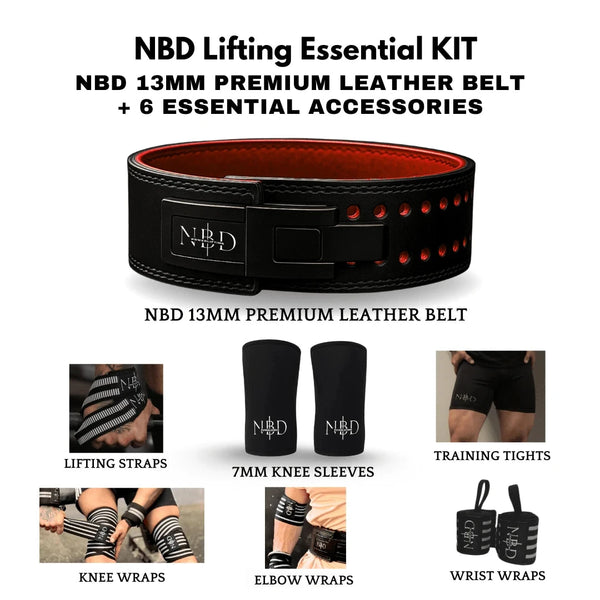
NBD Essential Lifting Kit
Belt plus 6 core accessories. Built for lifters who want the essentials covered in one order without paying for anything they won't use.
See Current Price →MOST POPULAR

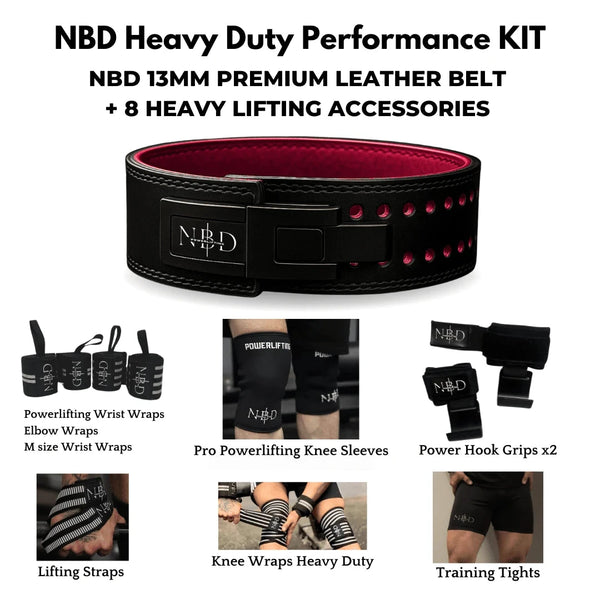
NBD Heavy Duty Performance Kit
9 pieces of competition-grade gear — belt, sleeves, wraps and straps together. The kit most intermediate to advanced lifters land on.
See Current Price →FULL STACK

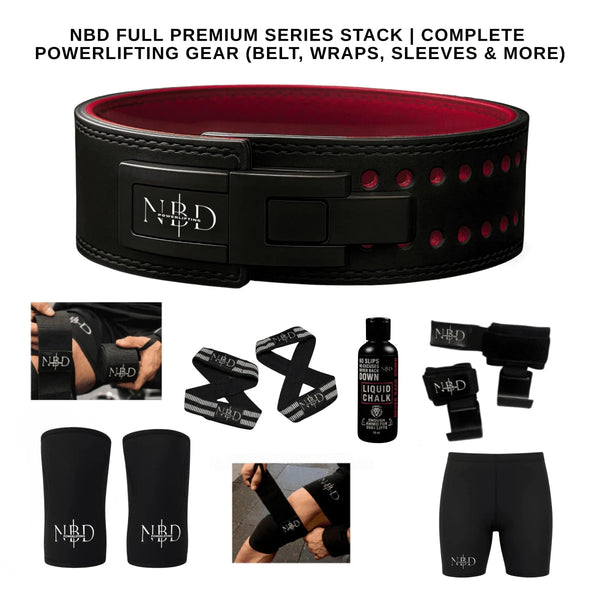
NBD Full Premium Series Stack
Belt, wraps, sleeves, straps, hooks and more in one complete set. Built for lifters who train seriously across every major lift.
See Current Price →Getting the Sizing Right
Whatever you buy first, size it correctly or it won't do its job. Belts and sleeves both depend on a snug, consistent fit — too loose and you lose the entire benefit. Our belt size guide walks through exact measurements before you order, whether you're buying a single belt or a full kit.
Frequently Asked Questions
What's the first piece of powerlifting gear I should buy?
A lifting belt. It has the biggest impact on your squat and deadlift of any single piece of gear, and everything else — sleeves, wraps, straps — is a smaller, more specific upgrade on top of it. If you buy nothing else this year, buy the belt.
Do I need both knee wraps and knee sleeves?
No, not to start. Knee sleeves are the right choice for almost all beginner and intermediate lifters — they give joint support and warmth without changing how the squat feels. Knee wraps are a more aggressive, rebound-heavy tool used by raw-with-wraps or equipped competitors, and most lifters never need them.
Is it cheaper to buy a kit or buy each item separately?
A kit is cheaper per item only if you actually need most of what's inside it. An 8-9 piece kit you'll use in full is genuinely better value than buying the same pieces one at a time. Paying for accessories you'll never touch isn't a discount — it's clutter you paid for.
What should a beginner's first kit include?
A belt and a pair of knee sleeves. That combination covers the two things that matter most in your first year: core bracing and joint support on squats. Add wrist wraps, lifting straps, and knee wraps later, as your training actually calls for them.
Build Your First Kit
Start with the belt. Add what your training actually needs from there. Prepaid orders above ₹1,000 ship free across India.
SHOP KITS & BUNDLES →