More lifters buy the wrong one of these two products than any other piece of gear in the gym. Wrist wraps and lifting straps look similar, sit in the same part of the bag, and get sold in the same bundles — and they do completely opposite jobs. Getting this right is worth more than getting the brand right.
The One-Line Answer
Wrist wraps are for pushing. Lifting straps are for pulling.
A wrap stops your wrist folding back under a bar you are pressing. A strap ties your hand to a bar you are pulling so your grip stops being the thing that fails first. Neither one substitutes for the other in any direction.
Wrist Wraps vs Lifting Straps
| Factor | Wrist Wraps | Lifting Straps |
|---|---|---|
| Problem solved | Wrist bends back under load | Grip fails before the muscle does |
| Movement pattern | Pressing — bench, overhead, dips | Pulling — deadlift, rows, shrugs |
| Attaches you to the bar? | No | Yes |
| Helps your grip? | Not at all | Entirely |
| Permitted in competition? | Yes, within stated limits | No — training only |
| Risk of overuse | Wrist never works unsupported | Grip never catches up to your back |
If your bench is stalling and the bar feels like it is drifting behind your wrist at the bottom, you want wraps. If your deadlift sets end because the bar is rolling out of your fingers while your back still has reps left, you want straps. If both are true, that is normal, and it is why the two get bundled together so often.
What Length Wrist Wrap Should You Buy?
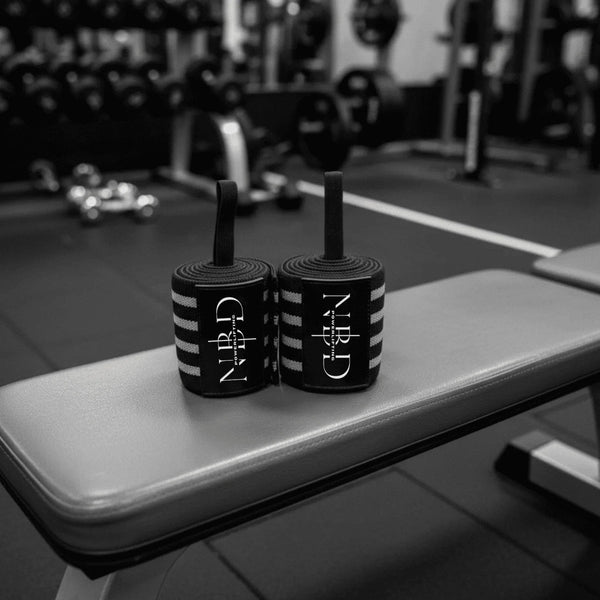
This is the decision that actually changes how the product performs, and it is the one most buying guides skip entirely. NBD makes three lengths, and they are not a good-better-best ladder — they are three different tools.
| Length | Who it is for |
|---|---|
| 18 inches (S) | Smaller wrists, and general gym training where you want the wrap on and off quickly between exercises. Light, fast, modest support. |
| 24 inches (M) | The versatile middle. Enough material that you can make it more or less supportive by changing how many passes you take. The right default if you press heavy some days and do general work on others. |
| 1 metre | The powerlifting length. The most passes, the stiffest lockout, and the maximum length permitted under IPF rules. Buy this if heavy bench and maximal pressing are the point. |
A longer wrap is not automatically better. A metre of stiff material on a small wrist is genuinely awkward to manage and slow between sets, and a lifter who finds their wraps annoying stops wearing them. Match the length to the wrist and to the training.
Stiff or Flexible?
The second axis, and the one people discover only after buying. A stiff wrap resists hard and gives you a locked joint at the bottom of a heavy press. It is uncomfortable, it is meant to be, and it is what you want for low-rep pressing near your limit.
A flexible wrap gives warmth, mild compression and a reminder to keep the wrist neutral without fighting you. It is far more pleasant for high-rep work, machine pressing and long sessions, and it is nearly useless on a maximal single.
If you are buying one pair and you press heavy, buy stiff. Comfort is a poor reason to choose support equipment.
What the Rulebook Actually Says
Wrist wraps are one of the few supportive items genuinely permitted in competition, which makes the details worth knowing — particularly the ones that catch people out on the platform rather than in the shop.
Under IPF rules:
- A wrist wrap may not exceed 1 metre in length or 8 cm in width.
- The covering on the wrist may not extend more than 10 cm above or 2 cm below the centre of the wrist joint, and the total covering width may not exceed 12 cm.
- A loop may be attached to help secure the wrap, but it must not remain over the thumb or fingers during the lift.
- Wrist wraps and sweat bands may not be combined.
That third one is the one that costs people attempts. Plenty of lifters wrap up, hook the loop over the thumb to hold tension, and then walk out to the bar with it still there. Take the loop off the thumb before you lift. Make it part of your setup routine so it is automatic.
The coverage limit is worth reading twice as well. A 1 metre wrap is at the length limit, but it is entirely possible to take a legal wrap and wind it too far up the forearm, which puts the covering outside the limit even though the wrap itself is legal. Wrap around the joint, not up the arm.
NBD builds to these dimensional specifications and states them openly. NBD is not currently listed on any federation's approved-equipment register and does not claim to be, so check the current rulebook and equipment list for your own federation before meet day.
How to Wrap Your Wrists Properly
- Anchor the thumb loop and start below the joint. Beginning on the forearm side gives you something to pull against.
- Work upward, overlapping each pass by about half. Even tension throughout, not tight in patches.
- Cross the joint itself for two to three passes. This is where the stiffness does its work. Everything else is anchoring.
- Finish just above the joint and secure the velcro along its full length. Pressing down only the corner is why velcro peels mid-set.
- Take the loop off your thumb. Always, whether you are competing or not — it changes how the wrap loads your hand.
- Test it. You should not be able to bend the wrist backwards. Your hand should not tingle or change colour. If it does, you have gone too tight.
When You Actually Need Straps
Straps earn their place at one specific moment: when your grip gives out while the target muscle still has work left. That is a real limiter on heavy rows, shrugs and high-volume pulling, and strapping those sets means your back gets the session your back needed.
NBD Lifting Straps come in three shapes, and the shape matters more than people expect:
- Straight — the most popular and the easiest to learn. Wrap the tail around the bar, grip over it, go.
- Infinity 8 — a closed figure-eight loop. Locks the hand to the bar hardest, and is the slowest to get out of, which is exactly why it suits heavy shrugs and holds.
- Collar — a closed loop that seats around the wrist, quick to set up and comfortable for repeated sets.
If grip is failing on deadlift specifically and you would rather not wrap at all, power hook grips take the load onto a steel hook instead of your fingers. More support than a strap, less feel for the bar, and genuinely useful for lifters training around a hand or forearm injury.
The Honest Warning About Straps
Grip is trainable, and it only trains when you make it work. A lifter who straps every pulling set from their first month builds a back their hands cannot hold onto, and that gap shows up the day they test a deadlift raw or compete, where straps are not permitted.
The pattern that works: pull raw for as long as grip holds, and strap the sets past that point. Straps remove grip as a limiter on back training. They are not a way to skip having a grip.
The NBD Wrist Wrap Range
- NBD Special Wrist Wraps — all three lengths in one listing, 18 inch, 24 inch and the 1 metre Powerlifting Special. Left and right-specific so both wrists get the same wrap. The starting point if you are not yet sure which length suits you.
- NBD Powerlifting Special 1 Metre — the stiff metre, built for lifters who want maximum support at the wrist joint on heavy pressing.
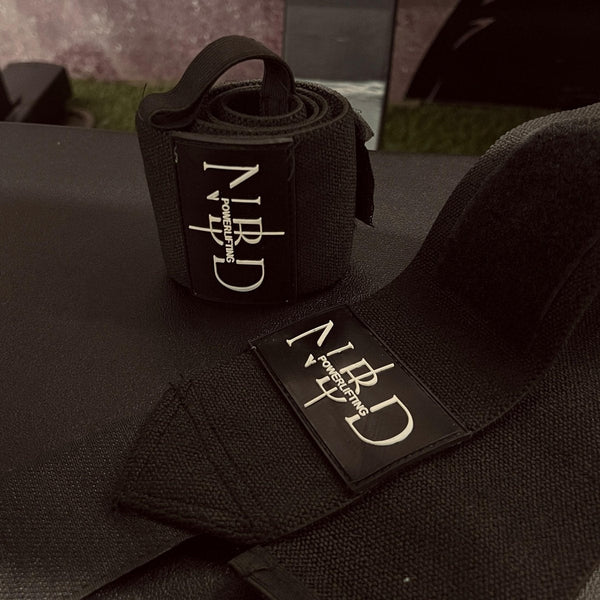
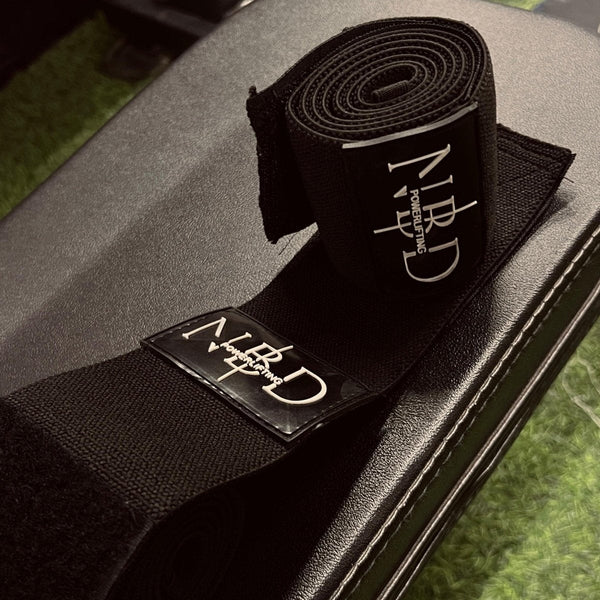
- NBD Powerlifting Wrist Wraps 1M — high-resistance fabric and a heavy velcro closure at the full metre length.
- NBD Premium Wrist Wraps, Black Series — the Black Series construction across all three lengths.
Making Them Last
Wrist wraps fail in two places and only two: the elastic goes slack, or the velcro stops gripping. Hand wash in cold or warm water with a mild detergent and air dry — never a washing machine, never a tumble dryer, because heat destroys elastic recoil permanently. Close the velcro before you put them in your bag so it does not fill with lint. Unroll them rather than leaving them balled up damp.
Three Lengths, Built to Stay Stiff
Manufactured by NBD, left and right-specific, with reinforced velcro at the point cheap wraps fail first. Trusted by 15,500+ lifters across India, with free pan-India shipping on prepaid orders above ₹1,000 and COD at extra charge. Not sure which length fits your wrist and your training? Message the team and describe how you press.
SHOP NBD WRIST WRAPS →Frequently Asked Questions
What is the difference between wrist wraps and lifting straps?
They solve opposite problems. Wraps stabilise the wrist joint so it does not bend back under something you are pushing. Straps attach your hands to the bar so grip stops being the limiter on something you are pulling. A wrap does nothing for grip and a strap does nothing for wrist stability. Most lifters who train both patterns own both.
What length wrist wrap should I buy?
18 inches for smaller wrists and quick on-and-off gym work. 24 inches is the versatile middle, where the number of passes lets you dial the support up or down. 1 metre is the powerlifting length and the maximum permitted under IPF rules. If you mostly bench heavy, buy the metre.
Are wrist wraps allowed in powerlifting competition?
Yes, within limits. Under IPF rules a wrap may not exceed 1 metre long or 8 cm wide, the covering may not extend more than 10 cm above or 2 cm below the centre of the wrist joint, and the covering width may not exceed 12 cm. A securing loop is allowed but must not remain over the thumb or fingers during the lift, and wraps may not be combined with sweat bands. Check your own federation's current rulebook.
Should beginners use lifting straps?
Sparingly. Grip develops from pulling heavy things unassisted, so strapping everything from day one means it never catches up to your back. Pull raw while grip holds, strap the sets past that point.
Should I wear wrist wraps for every set?
No. They are a working-set tool. Wrapped tight enough to do their job they restrict the joint, which is fine for minutes and not for an hour. Take them off between sets and skip them for warm-ups and light accessory work.
Why do my wrist wraps go loose after a few weeks?
The elastic has stretched out permanently. The wraps that feel most comfortable in week one are usually the ones that go slack fastest — softness on day one is a warning sign. Stiffness, dense weave and reinforced velcro are what survive. Hand wash cold, air dry, no heat.
Related reading: Best elbow wraps for powerlifting in India · Choosing your first powerlifting kit · NBD lifting straps and hook grips · All NBD straps, wraps and sleeves