

How to Use Lifting Straps So the Bar Cannot Roll Out
How to use lifting straps: the wind that stops the bar rotating, which shape to learn first, and when to pull raw instead. Pan-India shipping, COD.
To use lifting straps, thread the tail through the loop and seat the strap on your wrist, pass the tail under and around the bar winding it toward you, then roll the bar back to take up every bit of slack before you close your hand over the top. Set both hands before you pull rather than fixing the second one on the way up, and take the straps off between sets.
Almost everyone gets the first three steps right and skips the fourth. Rolling the bar back is what turns a wrap that is merely wound around the bar into one that cannot rotate inside your hand, and it is the difference between a strap that holds and a strap that feels like it is slipping.

A lifting strap is a length of webbing that transfers the load on a pulling movement from your fingers to your wrist, so that your grip stops being the thing that ends the set. It is a training tool for deadlifts, rows, shrugs and rack pulls. It is not a support device, it does nothing for your back or your bracing, and it belongs on some of your pulling work rather than all of it.
How to use lifting straps: the five-step wind, in order
Do these in sequence. Each one prevents a specific failure, and skipping any of them produces a different complaint.
- Thread the tail through the loop and seat the strap on your wrist. Snug against the bone, not halfway up the forearm. A strap sitting too high puts the load across soft tissue instead of the joint it was meant to load.
- Set the strap so the tail hangs from the palm side of your hand. If the tail comes off the back of your hand you cannot wind it under the bar without turning your wrist into a position you do not want to pull from.
- Pass the tail under and around the bar, winding toward you. Toward you, not away. Winding away from your body unwinds under load — the bar rotates in the direction that feeds slack back into the wrap instead of taking it up.
- Roll the bar back toward you to take up the slack. This is the step. With the tail wound, rotate the bar backwards under your palm so the webbing tightens onto itself. You should feel the wrap go from loose fabric to a solid connection.
- Close your hand over the top and grip normally. You still hold the bar. The strap is carrying most of the load, your hand keeps the wrap in place and gives you the feel you need to know where the bar is.
Then set the second hand the same way before you pull anything.
Why the bar rotating is the thing you are actually stopping
The complaint people bring to straps is that they slip. Almost always, they are not slipping — they are unwinding.
A bar in your hands is free to rotate. Under a heavy pull it will rotate, and if there is any slack in the wrap, every degree of that rotation is spent loosening the webbing rather than loading it. You feel the bar creeping down your fingers and conclude the straps are not gripping. What has actually happened is that the wrap was never tightened onto itself in the first place.
That is why the roll-back matters more than how many times you wind. A single tight wrap that has been rolled back holds better than three loose ones, because three loose ones just give the bar more slack to spend.
It is also why the surface of the strap matters. NBD straps carry a white rubber covering, and the point of it is friction: the strap grips the bar instead of sliding along it as the set goes on. Smooth webbing on a polished bar with chalk on it is a harder problem than most people expect.
Which of the three shapes to learn on
NBD lifting straps come in three shapes — Straight, Infinity 8 and Collar — and the shape changes how they behave more than people expect. All three are sold as a pair, left and right.
Learn on the Straight. It is, in NBD's own words, the most popular and the easiest to learn: wrap the tail around the bar, grip over it, go. The reason to start here is not simplicity, it is the exit. A straight strap is quick to bail out of, which is exactly what you want the first time a heavy pull goes wrong.
Infinity 8 is a closed figure-eight loop that locks the hand to the bar hardest. That is a genuine advantage and a genuine cost: it is the slowest to get out of, so it suits heavy shrugs, holds and static work rather than a maximal deadlift where you may need to drop the bar in a hurry.
Collar is a closed loop that seats around the wrist, fast to set up and comfortable across repeated sets — the one that spends the least time between you and the next set.
Which shape suits your training is a longer decision than this article is for, and the lifting straps collection sets it out shape by shape. If you already know you want a pair, the NBD lifting straps themselves list all three.
Setting both hands, and the bail-out you should rehearse
Set both hands before you pull. Not one, then the bar, then the other on the way up.
Fixing the second strap mid-pull means one hand is loaded and the other is not, which twists the bar, and it means your attention is on your hand at the moment it should be on your setup. Wind the first, wind the second, then take your breath and brace.
Rehearse the exit before you need it. On a Straight, opening your hand releases the wrap and the bar falls away — that is the whole bail-out. On the two closed shapes it is not automatic: the loop is around your wrist, so you have to rotate the bar forward to unwind before your hand is free. Do that once with an empty bar so your hands already know it. The worst time to discover you cannot let go quickly is the rep where you need to.
The lifts straps belong on — and the ones they do not
Straps belong on pulling work where your grip would end the set before the muscle you are training does: deadlifts and rack pulls, barbell and dumbbell rows, shrugs, and high-volume back work where the last sets are decided by your hands rather than your lats.
They do not belong on squats, bench or overhead work, where your grip is not the limiter and the bar is not being pulled out of your hand.
And do not use them on cleans, snatches or anything you may need to release instantly. A closed loop that will not let go of a bar you have to drop is a hazard, not a support.
When to pull raw instead
Grip is trainable, and it only trains when you make it work. A lifter who straps every pulling set from their first month builds a back their hands cannot hold onto, and that gap shows up the day they pull raw.
The pattern that works is simple: pull raw for as long as your grip holds, then strap the volume work and the heaviest sets where grip would otherwise cut the set short. Straps remove grip as a limiter on back training — they are not a way to skip having a grip.
Worth knowing before meet day: lifting straps are a training tool, not a competition one. The rulebooks set out permitted personal equipment in detail, and lifting straps do not appear on those lists. Every competition deadlift is pulled with your own hands. Rulebooks are revised annually, so check your own federation's current one rather than taking this page's word for it.
Straps, hooks or wrist wraps — one line each
These three get confused constantly, and they solve three different problems.
Straps take the load off your fingers on pulls. Hook grips put it on a steel hook instead, which is more support and less feel for the bar — we compare straps and hooks properly here, and the NBD Premium Power Hook Grips are the version with a padded cuff. Wrist wraps do not help your grip at all; they stabilise the wrist joint under a press, which is a different job entirely — wrist wraps versus lifting straps settles that one, and how to wear wrist wraps covers wrapping them properly.
Taking them off, and making them last
Take the straps off between sets. A strap left cinched on the wrist through a whole session is just restricting circulation for no benefit, and it will not make the next set better.
Straps fail at the stitching where the loop is formed, and damp storage accelerates it. Air dry them after a sweaty session rather than leaving them balled at the bottom of a gym bag, and look at the loop stitching every few months on a pair you pull heavy with. That seam is carrying your entire working weight, and it is the one part of the strap that gives no warning.
FAQ
How do you use lifting straps for deadlifts?
Thread the tail through the loop, seat the strap on your wrist, pass the tail under and around the bar winding toward you, then roll the bar back to take up the slack and close your hand over the top. Set both hands before you pull, never one on the way up.
Which way should the strap tail face when you wind it?
The tail should hang from the palm side of your hand so it feeds straight under the bar, and you wind it toward your body rather than away. Winding away lets the bar's rotation under load feed slack back into the wrap, which is what people mistake for the strap slipping.
Are lifting straps allowed in powerlifting competition?
No. Lifting straps are a training tool rather than a competition one, and they do not appear on federation lists of permitted personal equipment. Every competition deadlift is pulled with your own hands. Rulebooks are revised annually, so check your own federation's current rulebook before you enter.
Should beginners use lifting straps?
Not on everything. Pull raw while your grip holds, then strap the volume work and the heaviest sets where grip would otherwise end the set early. A lifter who straps from the first month builds a back their hands cannot hold, and that gap shows up the day they pull without straps.
Do lifting straps hurt your wrists?
They should not. Discomfort usually means the strap is sitting too high on the forearm rather than snug against the wrist, or that the padding is carrying the load on too narrow a line. Take them off between sets as well — a strap left cinched on for a whole session restricts circulation for no benefit.
Can you use lifting straps for squats or bench press?
No, and there is nothing to gain by trying. Straps solve one problem: your grip failing before the muscle you are training does. On squats and bench your grip is not the limiter and the bar is not being pulled out of your hand, so a strap adds nothing while taking away your feel for the bar.
Free pan-India shipping on prepaid orders above ₹1,000, with cash on delivery available separately — the shipping and COD page sets out both. NBD Powerlifting is an Indian manufacturer of competition-grade powerlifting equipment — lever belts, knee sleeves, wrist wraps and lifting straps — serving 15,500+ lifters across India.
The gear this guide is written about. Built and shipped from India.
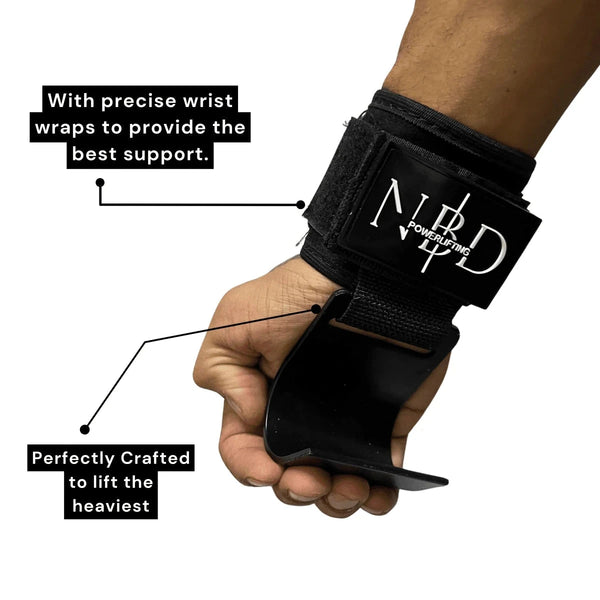 NBD Premium Power Hook GripsLifting Accessories
View product
NBD Premium Power Hook GripsLifting Accessories
View product
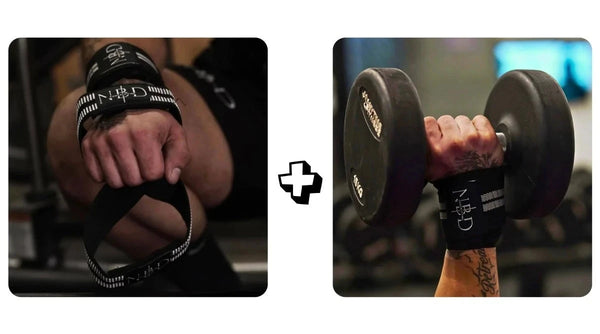 Combo NBD Special Wrist Wraps + NBD Lifting Straps (Save extra 199₹)Lifting Straps
View product
Combo NBD Special Wrist Wraps + NBD Lifting Straps (Save extra 199₹)Lifting Straps
View product
READY TO GEAR UP?
Shop India's most trusted powerlifting equipment — built for serious lifters.