

How to Cut Without Losing Strength
How to cut without losing strength - the deficit, the protein, what to change in training while you lose fat, and the rule for when to stop.
You cut without losing strength by keeping the heavy work heavy and cutting the volume around it, keeping protein high while everything else comes down, and running the deficit slowly enough that your recovery keeps pace with it. Some loss, on some lifts, is the price of the phase rather than proof that the plan failed — and telling those two apart is most of the skill.
The pages that currently answer this question answer it as a diet. The diet is the easy half. The half that decides whether you come out of a cut still able to lift is what you do with your training while you are in it, and what evidence you use to decide the phase is over.

What "without losing strength" honestly means
Nobody holds everything. If you are eating less than you need, you are recovering from less than you were, and something has to give. The useful question is not whether you lose anything but what you lose, and in what order.
Strength expression rests on three things: how well your nervous system drives the movement, how practised the movement is, and how much muscle is available to do it. The first two are cheap to maintain in a deficit — they need exposure to heavy loads, not calories. The third is what you are actually defending.
Which means the first thing a cut takes is almost never your top-end number. It is your work capacity — how much total hard work you can do in a week and still turn up recovered for the next session. The single still moves. The fifth set of five stops being available. People read the second as the first, conclude they are getting weaker, and panic-change the plan at exactly the moment nothing was wrong.
A fat-loss phase is not a weight cut — and the search results will not tell you that
These are two different activities, and the results page for this question mixes them freely.
A fat-loss phase is a training block, run over months, where you eat less than you need so that body composition changes. A weight cut is what a competitor does in the days and hours before a weigh-in to land in a lower class — manipulating gut content, glycogen and body water, then refuelling immediately after.
They share a word and nothing else. The methods are different, the timescales are different, and the risks are different.
That distinction matters here because of what sits on page one. One of the top results is a 2025 narrative review in the Journal of the International Society of Sports Nutrition — Renner, Helms, Kwan and Csapo, "Short term body mass manipulation in powerlifting" — and its snippet reads as though it is about fat loss. It is not. It is a review of acute competition weight cutting, and it states plainly that the practice should not be regarded as a standard preparation method. Searching this question will also surface autocomplete suggestions for water cuts, gut cuts and losing weight in twenty-four hours.
NBD does not publish weigh-in cutting protocols. Acute dehydration and rapid rebound carry real risk, they need a qualified practitioner watching an individual athlete, and a blog post is the wrong object for them. Everything below is about a training phase.
The size of the deficit decides most of the outcome
There is one trade-off underneath all of this, and it does not go away.
A larger deficit loses fat faster. It also spends the thing that keeps your lifts up. Recovery is bought with food and sleep; when you reduce the food, every hard session costs more than it did and returns less. Run the deficit hard enough and you are not choosing between fast and slow fat loss, you are choosing between a cut you finish and a cut that finishes you.
The failure pattern is consistent and it is almost always the same person: someone who cuts calories aggressively and trains harder at the same time, because it feels like both levers push the same direction. They do not. Training harder is a withdrawal from the same account the deficit is already draining.
There is no single correct rate, and anyone publishing one does not know your training age, your bodyweight, how long you have to do this, or what your week actually looks like. What is true for everyone is the direction: the more slowly you go, the more of your strength you keep, and the more likely it is you finish. Setting that rate for a specific person is a coaching decision, and it is one of the things an NBD coach is paid to do.
Protein is the input that does not flex
When calories come down, most things on the plate are negotiable. Protein is the one that is not.
Protein is what you are asking your body to preserve muscle from while you are giving it less of everything else. Every other adjustment — less oil, smaller carb portions, fewer snacks — is a lever you can pull. Cutting protein to make the calorie maths work is the one change that directly attacks the thing the whole phase is supposed to protect.
This is the part that is genuinely harder on an Indian plate, because the staples are carbohydrate-led and the protein is spread thin across them rather than concentrated in one item. That problem has its own answer, and it does not involve buying anything: how to hit your protein target on an Indian vegetarian diet, without whey works through where the protein actually is in the food you already eat and how to build a day that reaches the target.
What to change in training — and what to leave alone
This is the section that decides the outcome, and the instinct almost everyone has is backwards.
The instinct is to train more during a cut — higher reps, shorter rests, more sessions, conditioning bolted on — because that feels like it burns more. It is the most reliable way to lose your lifts. You have less recovery available and you have just increased the demand on it.
What actually works is the opposite shape. Keep the intensity. Cut the volume.
The heavy top sets are the signal. They are what tells your body that the muscle you have is still needed, and they are comparatively cheap — a handful of hard sets near your limit costs far less recovery than the twenty sets of accessory work sitting behind them. The volume is where the cost is. So when recovery becomes the scarce resource, you spend it on the signal and you economise on everything else.
In practice, cut in this order:
- Accessory and isolation work first. It is the most expendable and the most expensive per unit of benefit right now.
- Back-off and volume sets next. Keep the top set; trim what follows it.
- Frequency after that, if you need to — fewer sessions, same quality.
- The heavy work last, and reluctantly. If you are cutting your top sets, the deficit is too aggressive or the phase has run long enough. See the next section but one.
One tool matters more in a deficit than it does in a surplus: honest load regulation. The same absolute weight on the bar genuinely feels heavier when you are under-fuelled, and a plan built on fixed percentages cannot see that. A plan built on perceived effort can. If you have not used it, RPE is the tool for reading what a set actually cost you, and RIR is the same idea expressed as reps left in the tank. Those are tools for managing load. This one is about managing energy — and a cut is the situation where the two collide, because the load did not change and your capacity to absorb it did.
Conditioning is a training cost, not a free deduction. If you add it, take something else out.
How to tell it is working
Three instruments, and they disagree with each other on purpose.
The logbook is the one that answers the question this article is about. If your top sets are holding week to week, you are keeping your strength, whatever the mirror says.
A tape measure tracks the thing you are actually trying to change. Composition moves slowly and unevenly, and it moves in places the scale cannot report.
Bodyweight is the noisiest of the three on any given day and the most useful over a month. Food volume, water, salt and sleep all move it independently of fat, which is why a single morning reading tells you almost nothing and a trend across four weeks tells you most of what you need.
A phase is going correctly when the weight trend is drifting down across weeks, the tape agrees, and the logbook is flat or close to it. If any one of those three disagrees with the other two, the answer is usually to wait another two weeks before doing anything. Most cuts are abandoned inside the window where nothing has gone wrong yet — the same failure described in what actually changes in your first three months of training, arriving at a different stage.
When to stop — the rule, written down
Almost nothing published on this question tells you what ends a cut. It should, because deciding in advance is what stops the phase running on out of momentum.
End it when any one of these is true:
- Your top-end lifts have fallen across two consecutive weeks while volume was already reduced. That is the deficit outrunning your recovery, and continuing will cost muscle rather than fat.
- Sleep, mood or appetite disruption has become the loudest thing in your week. That is a recovery signal wearing a different hat.
- You have reached what you set out to reach. Cuts are much easier to start than to stop.
- The phase has run long enough that you are maintaining a deficit out of habit rather than plan, and you could not say what it is still for.
Ending a cut is a step you schedule, not a collapse you fall into — calories come back up deliberately, the volume comes back before the intensity does, and the logbook keeps running so you can see the lifts respond.
One boundary, stated plainly because it belongs in any honest page on this subject: if food or the number on the scale has stopped being a training variable and started running your day, that is outside what a strength coach handles, and the right next conversation is with a qualified professional rather than with a programme. Please read the training terms and health disclaimer before acting on anything here.
If you lift in an Indian gym and eat on an Indian plate
Nothing in the top twenty results is written for this, so here is the practical version.
If you eat in a mess or a hostel, you do not control the cooking, so control what you can. You are rarely choosing the oil or the method. You are almost always choosing how much of the protein item lands on your plate relative to the rice and roti, and that single ratio does more than any recipe change.
Carbohydrate is the easy part of an Indian day and protein is the scarce part. Roti, rice and dal will meet your energy needs without effort; the target that needs deliberate work is the protein one, which is exactly why it gets its own article.
Family meals and festivals are not the problem people think they are. A phase is a trend across weeks. One meal does not end it, and eating around a table without a spreadsheet is a reason cuts get finished rather than abandoned.
A crowded gym with limited equipment is, for once, an advantage. The programme you can actually run in that gym is heavy compound work and not much else — which is the shape a cut wants anyway. If you are training heavy, a belt earns its place on the top sets you are protecting, and it earns it more in a deficit than out of one, because those sets are now carrying the whole signal.
FAQ
Is it possible to cut without losing strength?
Usually you can hold your top-end lifts, but not your full work capacity. A well-run deficit keeps heavy singles and top sets close to where they were while your tolerance for total weekly volume narrows. Expect the fifth set to disappear before the first one does, and judge the phase on the logbook rather than on feel.
Is it okay to cut while powerlifting?
Yes, provided the timing is right. A fat-loss phase belongs in a block where you are not chasing a peak — off-season, or between meets. Running one into the final weeks before a competition means asking for maximal performance from a recovering body. Plan the deficit and the peak as separate phases rather than stacking them.
How do I maintain strength while cutting if I am lifting heavy?
Keep the heavy work and remove volume from around it. Trim accessory and isolation sets first, then back-off sets, then frequency, and leave the top sets alone for as long as you can. Regulate by perceived effort rather than fixed percentages, because the same load genuinely feels heavier in a deficit.
Should I change my programme during a cut?
Change the volume, not the plan. Swapping to a new programme mid-cut removes the one record that tells you whether the deficit is working, because you no longer have comparable numbers week to week. Keep the same lifts and the same structure, run less of it, and let the logbook stay readable throughout.
How do I lose fat without losing muscle at home?
The principles do not change without a gym: a moderate deficit, protein held high, and hard resistance training kept in whatever form the equipment allows. What changes is that progressive overload is harder to arrange, so track reps and proximity to failure carefully. Training at home makes the protein target more important, not less.
How do I cut weight for a meet?
This article deliberately does not answer that. Making weight for a weigh-in is a separate practice involving body water, gut content and glycogen over days or hours, it carries real risk, and the narrative review cited above says it should not be treated as standard preparation. It needs a qualified practitioner working with you individually, not a general article.
If you want the deficit, the training and the stopping rule set for your situation rather than for an average, that is what the NBD training assessment is for — a written intake read by a human coach on Team NBD, with a recommendation back within 24 hours. NBD Powerlifting is an Indian manufacturer of competition-grade powerlifting equipment — lever belts, knee sleeves, wrist wraps and lifting straps — serving 15,500+ lifters across India, and it coaches lifters through phases exactly like this one.
Built and shipped from India, for lifters who never back down.
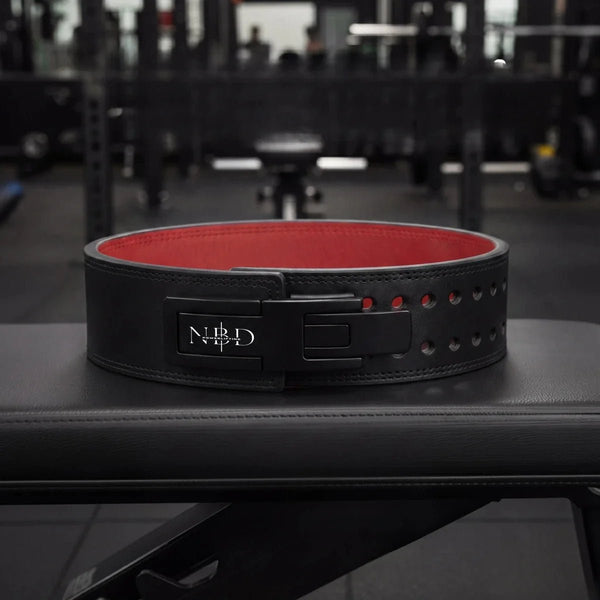 NBD Dual Pro Lever Belt (10mm & 13mm)Weightlifting Belt
View product
NBD Dual Pro Lever Belt (10mm & 13mm)Weightlifting Belt
View product
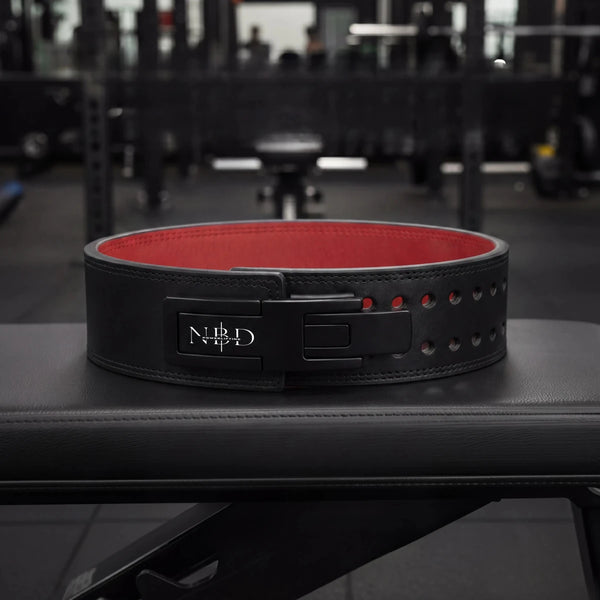 NBD 13mm Dual Pro Lever Belt – Elite Powerlifting Belt | Premium LeatherPowerlifting Belt
View product
NBD 13mm Dual Pro Lever Belt – Elite Powerlifting Belt | Premium LeatherPowerlifting Belt
View product
 NBD 10mm Lever Belt – Premium Leather | Choose from all Classic, Dual Pro, Gold Lever VariantsPowerlifting Belt
View product
NBD 13mm Lever Belt – Premium Leather | Choose from all Classic, Dual Pro, Gold Lever VariantsPowerlifting Belt
View product
NBD 10mm Lever Belt – Premium Leather | Choose from all Classic, Dual Pro, Gold Lever VariantsPowerlifting Belt
View product
NBD 13mm Lever Belt – Premium Leather | Choose from all Classic, Dual Pro, Gold Lever VariantsPowerlifting Belt
View product
READY TO GEAR UP?
Shop India's most trusted powerlifting equipment — built for serious lifters.