Single Prong vs Double Prong vs Lever Belt — Comparison
Every powerlifting belt does the same core job — giving your core something rigid to brace against — but the buckle mechanism changes how it feels to put on, take off, and fasten under a tight training window. Here's exactly how single prong, double prong, and lever belts compare, and which one fits how you actually train.
The One-Line Answer
Buy a lever if your weight is stable and you train heavy several times a week — it gives the same tightness every set and opens with one flip. Buy a single prong if your waist shifts across bulking and cutting blocks, because the extra holes make it the more forgiving choice. Double prong spreads tension across two rows but fastens slowest of the three, and is the specialised option rather than the default.
How Each Buckle Actually Works
- Single prong (pin buckle) — one metal pin passes through a single row of holes, the same mechanism as a standard belt. Simple, nothing to adjust or wear out beyond the leather itself.
- Double prong — two pins pass through two parallel rows of holes side by side. Spreads tension across a wider section of the belt, but both pins need to line up before it's fastened.
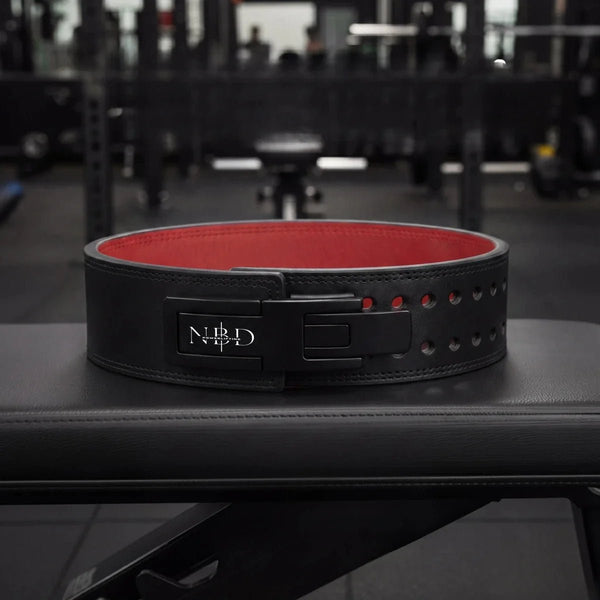
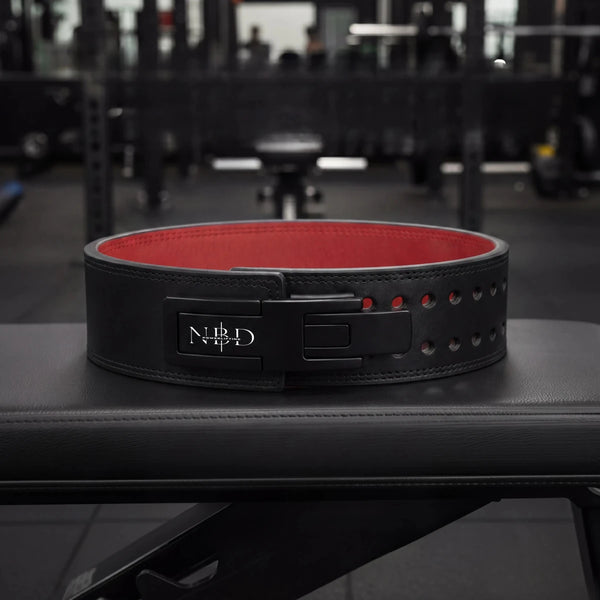
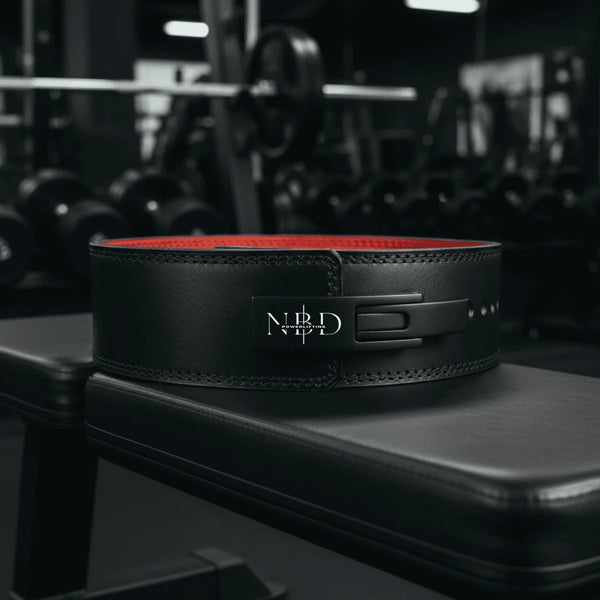
- Lever — a metal lever arm clamps down onto a fixed peg, tightened once to your exact waist size, then opened and closed with a single flip of the lever for every subsequent lift.
Single Prong (Pin Buckle) — Pros and Cons
A single prong belt is the simplest mechanism there is, which is exactly its appeal — no moving parts to wear out, easy on-the-fly adjustment for bulking or cutting phases, and a familiar feel if you've ever worn any standard leather belt. The trade-off is speed: lining up one pin through one hole is quick, but on a working set where you're tightening and loosening the belt repeatedly, it's slower than a lever.
Double Prong — Pros and Cons
A double prong belt spreads the load across two points instead of one, which some lifters find feels marginally more secure under maximal weight. It's a smaller niche within belt buckles — fewer brands make them, and NBD doesn't currently carry a double prong model — mainly because fastening two pins accurately takes longer than either single prong or lever, which matters when you're moving through several heavy sets in a session.
Lever — Pros and Cons
A lever belt is built for speed and consistency once it's sized correctly — flip it open, flip it shut, same tightness every single time. That consistency is genuinely valuable when you're bracing the same way for every top set. The trade-off is upfront: a lever belt is sized to one specific waist measurement, so it needs re-sizing (or a specific fit) if your waist changes meaningfully, unlike a prong belt's multiple adjustment holes.
Comparison at a Glance
| Factor | Single Prong | Double Prong | Lever |
|---|---|---|---|
| Speed on/off | Moderate | Slowest | Fastest |
| Adjustability | Multiple holes | Multiple holes | Fixed to one size |
| Moving parts | None | None | Lever mechanism |
| Best for | Changing waist size, simplicity | Lifters who prefer split-tension feel | Fast, repeatable heavy sessions |
Which Should You Buy?
If your waist size shifts across training blocks — cutting, bulking, or you're simply still finding your walking-around weight — a single prong belt's extra adjustment holes make it the more forgiving choice. If you've settled into a stable weight and train heavy multiple times a week, a lever belt's speed and consistency will save real time and hassle across a training block. Double prong is worth considering if you specifically want the split-tension feel and don't mind the slower fastening — it's a smaller, more specialised choice than the other two.
A belt is a long-term piece of equipment once you're training seriously — buy the mechanism that matches how your training actually looks, not whichever one you saw first.
NBD Belts by Buckle Type
SINGLE PRONG

NBD 8mm Pin Buckle Belt
Simple, adjustable, no moving parts — a dependable everyday training belt.
See Current Price →LEVER — MOST POPULAR

NBD 13mm Dual Pro Lever Belt
Fast on, fast off, same tightness every set. Built for heavy, frequent training.
See Current Price →LEVER — 10MM

NBD 10mm Lever Belt
Slightly more flexible at the hip crease — the lever mechanism with a softer feel.
See Current Price →Getting the Size Right
Whichever mechanism you choose, an accurate waist measurement matters more than the buckle type itself. Check our belt size guide before ordering — lever belts especially depend on getting this right the first time since they're sized to one fixed tightness.
Frequently Asked Questions
Which belt buckle type is best for beginners?
A lever belt is usually easiest for beginners — it goes on and off in one motion with no holes to line up, so there's less to get wrong while you're still learning to brace and size a belt correctly.
Is a lever belt better than a prong belt?
Neither is objectively better — they're different trade-offs. A lever belt is faster to put on and off and gives a fixed, repeatable tightness. A prong belt is more adjustable on the fly and has no mechanism that can wear out, but takes longer to fasten under a tight training window.
What is the difference between single prong and double prong belts?
A single prong (pin buckle) belt has one pin through one row of holes — simple and reliable. A double prong belt has two pins through two rows of holes, which spreads tension across a wider area of the belt but takes longer to fasten and remove.
Can I switch buckle types on the same belt?
No — the buckle mechanism is built into the belt itself. If you want to try a different type, you need a separate belt rather than a swappable part, though some lever belts do allow the lever piece itself to be replaced or adjusted for fit.
Find Your Buckle, Find Your Belt
Pin buckle or lever — built the same way underneath: full-grain leather, made to last. Prepaid orders above ₹1,000 ship free across India.
SHOP POWERLIFTING BELTS →