

Leather vs Nylon Lifting Belt: Which One Do You Actually Need?
Leather vs nylon lifting belt: what each material does under a heavy squat, which suits your training, and how to choose. Free prepaid shipping, COD.
Buy a leather belt if your training is built around heavy, low-rep squats and deadlifts, because a stiff leather belt gives you the same surface to brace into on the fifth rep as it did on the first. Buy a nylon belt if your training is high-rep, mixed or conditioning-heavy and you take the belt on and off between sets, because comfort and speed matter more there than maximum stiffness.

That is the short answer on leather vs nylon lifting belt, and most pages stop there. The part worth your time is why — because the difference between these two belts is not quality, and it is not how much they cost. It is where the support comes from. A leather belt arrives at the gym already stiff. A nylon belt arrives soft and becomes supportive only when you pull it tight. Everything else in this comparison follows from that one sentence.
What each material actually does under load
A lifting belt does not hold your back up. It gives your abdominals something firm to push against, so the pressure you build inside your trunk has somewhere to go. The physiology of that is its own subject and we have written it up separately in does a lifting belt weaken your core — this page is about the belt, not the brace.
What matters here is what the material does while you are pushing into it.
Leather is stiff and it keeps its shape. A thick strip of tanned hide, cut to a uniform width and held closed by a prong or a lever, does not meaningfully deform when your abdominals press outward. The surface is in the same place on every rep of the set. You learn what your brace feels like against it, and that feeling does not change between your warm-up and your top single.
Nylon is woven and it has give. A nylon belt is a length of webbing, usually with foam or padding behind it, closed with velcro or a quick-release buckle. It is supportive in proportion to how hard you cinched it, and it continues to yield a little as you push into it. That give is not a defect — it is the reason a nylon belt is comfortable enough to leave on for forty minutes of accessory work. But it means the belt's ceiling is set by your hands at the moment you fastened it, not by the belt itself.
⇒ The material decides the ceiling, not the belt. A leather belt's support is built in before you put it on. A nylon belt's support is whatever you could pull with your arms two seconds before you set up.
Where a nylon belt is genuinely the better buy
This section is here because leather belts are what NBD sells, and an honest comparison has to name the cases where the thing we do not sell is the right answer.
Conditioning and high-rep work. If a set lasts ninety seconds and you are breathing hard through all of it, a rigid belt cutting into your ribs is a real cost and the extra stiffness buys you nothing. A nylon belt is the better tool.
Long sessions with the belt coming on and off. Velcro opens and closes in under a second with one hand. A lever needs two hands and a prong needs a moment. If you are belting up for a dozen working sets and unbelting between each one, that adds up, and a nylon belt genuinely saves you the friction.
Comfort against the ribcage. Lifters with a short torso, a narrow gap between the bottom rib and the hip, or a history of finding rigid belts simply unpleasant often do better with a contoured nylon belt. A belt you do not wear supports nothing.
Travelling light. Nylon rolls, weighs little and does not care about being stuffed in a bag.
And the case nobody writes down: your training may not be heavy enough yet to need a rigid belt. If your squat and deadlift are still climbing every week on sets of eight, the belt is not the thing holding you back. There is no shame in a nylon belt for that phase, and we would rather say so than sell you leather a year early.
Where leather is the better buy
Maximal work. Once you are under a squat or over a deadlift that genuinely tests you, the repeatability of a stiff belt is the whole point. Same surface, same brace, every attempt.
Uniform width. A powerlifting-cut leather belt is the same width all the way around — front, sides and back. That matters, and it is why a contoured belt and a straight belt are not interchangeable at heavy loads.
Lifespan. Leather breaks in and then stops changing. A well-made belt outlasts several years of training. Velcro, by contrast, is the part of a nylon belt that wears — it loses grip gradually, and when it does, the belt is finished even though the webbing looks new.
Competition-specification construction. NBD belts are built to competition specification: uniform width, uniform thickness, no tapering. ⚠️ Every federation keeps its own equipment register, so check your own federation's current list before meet day rather than assuming any belt is accepted.
The four differences that actually decide it
Stiffness, and where support comes from
Built-in versus cinch-dependent. This is the whole comparison in four words. Leather is stiff before you touch it; nylon becomes supportive when you pull it. If you want the belt to be the constant in your setup, that argues for leather.
Width and taper
A rigid belt earns its keep by being the same width behind you as in front of you, so that the pressure you build has a continuous wall around it. Most nylon belts are contoured: wider at the back, narrower at the front. That is deliberate, and it is what makes them comfortable for high-rep work — but it also means the front of the belt gives you less to brace into exactly where a heavy deadlift needs it most.
Closure
Nylon gives you velcro or a quick-release clip. Leather gives you a choice, and that choice is its own decision — we have broken it down in single prong vs double prong vs lever belt. The short version: a prong is adjustable in fixed increments and simple to live with; a lever is the same tension every single time and is faster once it is set. Neither is available on a nylon belt.
Break-in and how long each lasts
A nylon belt is comfortable on day one and never gets better. A leather belt is stiff on day one, softens where your body actually bends over the first few weeks of use, and then holds that shape for years. If you have only ever used nylon, a new leather belt will feel wrong for a fortnight. That is the belt working, not the belt being wrong.
Which one suits your training right now
You train for strength, three or four days a week, and your squat and deadlift are the centre of the programme. Leather. Start at 8mm if you want a belt that is supportive without being punishing, or go straight to 10mm with a lever if you already know you want the same tension every set.
You compete, or you intend to. Leather, uniform width, no taper. Check your federation's current equipment list before you buy.
Your sessions are a mix of lifting and conditioning, or you are belting up for a dozen sets an hour. Nylon does that job better and we are not going to pretend otherwise.
You are eight months into training and everything is still going up. Neither, yet. Get your bracing right unbelted first, then buy leather when the numbers actually ask for it.
What leather vs nylon does not decide
Choosing leather is one decision. Two more sit underneath it, and they are separate pages on purpose.
Thickness and width. 8mm, 10mm or 13mm is not the same question as leather versus nylon, and the answer depends on how heavy you lift and how much stiffness you can actually use. That is covered in gym belt vs powerlifting belt.
The buckle. Prong or lever is a third decision, and it is the one lifters most often get wrong by buying on aesthetics. The buckle comparison linked above is the place to settle it.
Do not let a page selling you a belt collapse three decisions into one.
Buying a leather belt in India
Size it at the navel, not off your trousers. Belt sizing has nothing to do with your jeans size. Measure around your bare waist at the level of your navel, standing relaxed, and use that figure against the size guide. Getting this wrong is the single most common reason a first belt gets returned.
Nine sizes, XS to 5XL. Every NBD belt runs the full ladder. 2XL, 3XL, 4XL and 5XL are made to order, so allow two to three extra business days on those.
Built in Haryana. NBD has been building powerlifting equipment in Haryana since 2014, from Sirsa, which is why this page can talk about what leather thickness does rather than repeat what a catalogue says. 15,500+ lifters across India train in NBD gear, with 1,200+ verified reviews at 4.9 stars sitewide.
Shipping and COD. Shipping is free on all prepaid orders above ₹1,000, pan-India. Cash on Delivery is available across India with a shipping advance collected at the time of order, and orders usually dispatch within 24 to 48 hours of confirmation. If you are unsure which belt to size into, email support@nbdpowerlifting.com before you order rather than after.
FAQ
Is a nylon lifting belt good enough for heavy lifting?
For moderate loads, yes. A well-cinched nylon belt gives your abdominals something to push against and will serve most general gym training. At genuinely maximal squats and deadlifts its support becomes inconsistent, because the belt yields as you press into it and its stiffness depends entirely on how hard you fastened it that set.
Is leather actually better than nylon, or just more expensive?
Better for a specific job, not better in general. Leather is stiffer, keeps its shape under pressure and gives you a repeatable brace at maximal loads. Nylon is more comfortable, faster to fasten and better suited to high-rep and conditioning work. Neither material wins on every measure, and the right one depends on how you train.
Can you use a nylon belt for powerlifting?
For training, yes, and many lifters do for accessory and volume work. For competition, most federations specify belt construction, including uniform width and permitted materials, and many nylon belts do not meet it. Check your own federation's current equipment list before meet day, because those registers differ and they are revised.
Does a nylon belt stretch under a heavy lift?
It gives rather than stretches permanently. Woven webbing with padding behind it yields slightly when your abdominals press outward, so the wall you are bracing into moves a little through the rep. That is acceptable and even comfortable at moderate loads, and it is the main reason nylon feels less secure at maximal weights.
Which belt should a beginner buy first?
Learn to brace without a belt first, for several months. When your squat and deadlift are heavy enough that the last rep of a set feels genuinely hard, buy leather rather than replacing a nylon belt a year later. An 8mm leather belt is a sensible first belt: supportive, and far easier to live with than 13mm.
Is nylon better for deadlifts because it is thinner at the front?
Not for maximal deadlifts. A contoured belt is narrower at the front, which is comfortable when you hinge, but the front of the belt is exactly where a heavy deadlift needs something firm to brace into. Most lifters pulling near their limit prefer a uniform-width leather belt, even though it is less comfortable at setup.
How long does a nylon belt last compared with leather?
A leather belt breaks in over the first weeks, then holds its shape and lasts for years of regular training. A nylon belt is comfortable immediately and degrades gradually, and it is usually the velcro that finishes it: the closure loses grip long before the webbing wears out, and once it slips under load the belt is done.
Can you wear a nylon belt in a powerlifting competition?
Often not. Federations that regulate equipment typically specify belt width, thickness and construction, and contoured or velcro-closed belts frequently fall outside those rules. Every federation maintains its own current equipment register and they are not identical, so confirm against your own federation's published list well before you travel to the meet.
Shipping is free on all prepaid orders above ₹1,000 across India, with Cash on Delivery available with a shipping advance and dispatch usually within 24 to 48 hours. NBD Powerlifting is an Indian manufacturer of competition-grade powerlifting equipment — lever belts, knee sleeves, wrist wraps and lifting straps — serving 15,500+ lifters across India from Sirsa, Haryana.
The gear this guide is written about. Built and shipped from India.
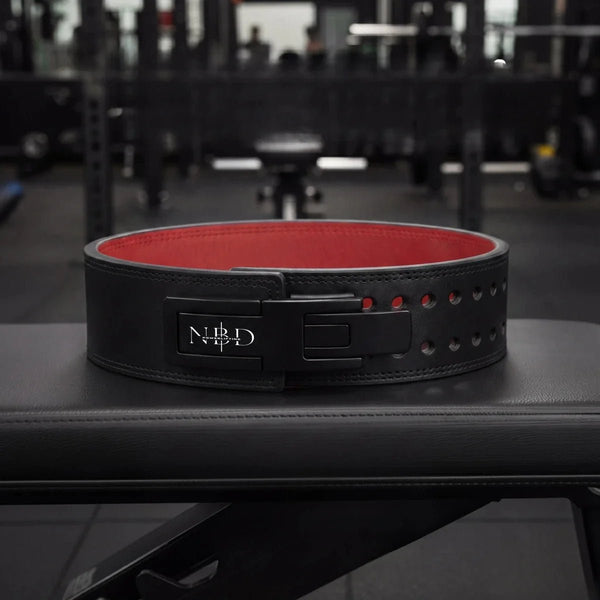 NBD Dual Pro Lever Belt (10mm & 13mm)Weightlifting Belt
View product
NBD Dual Pro Lever Belt (10mm & 13mm)Weightlifting Belt
View product
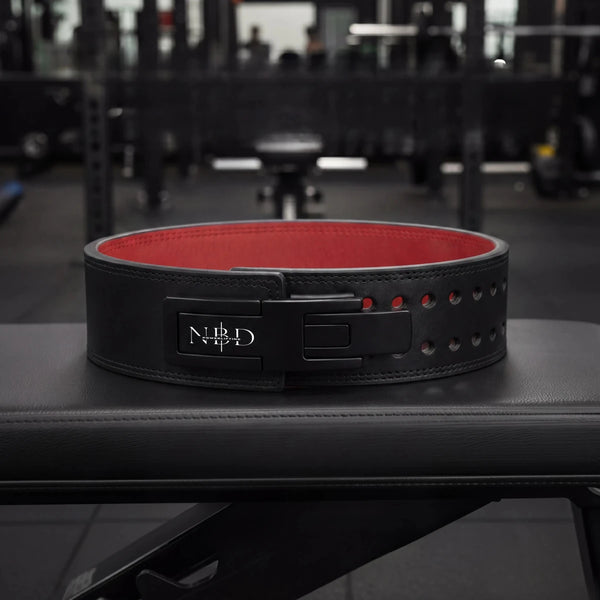 NBD 13mm Dual Pro Lever Belt – Elite Powerlifting Belt | Premium LeatherPowerlifting Belt
View product
NBD 13mm Dual Pro Lever Belt – Elite Powerlifting Belt | Premium LeatherPowerlifting Belt
View product
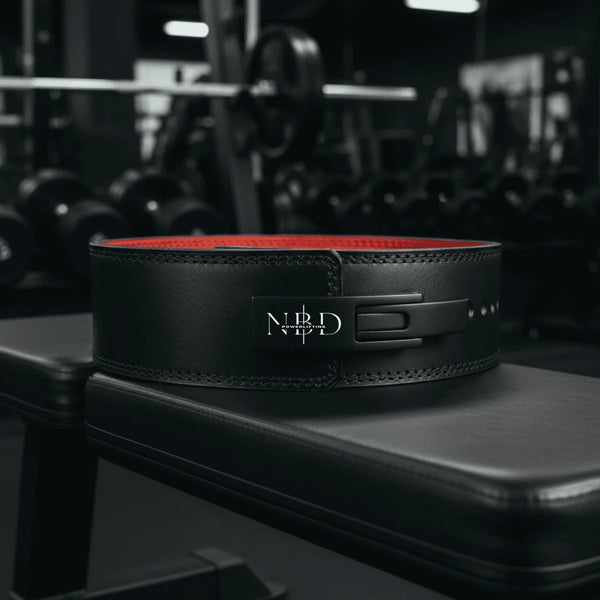 NBD 10mm Lever Belt – Premium Leather | Choose from all Classic, Dual Pro, Gold Lever VariantsPowerlifting Belt
View product
NBD 13mm Lever Belt – Premium Leather | Choose from all Classic, Dual Pro, Gold Lever VariantsPowerlifting Belt
View product
NBD 10mm Lever Belt – Premium Leather | Choose from all Classic, Dual Pro, Gold Lever VariantsPowerlifting Belt
View product
NBD 13mm Lever Belt – Premium Leather | Choose from all Classic, Dual Pro, Gold Lever VariantsPowerlifting Belt
View product
READY TO GEAR UP?
Shop India's most trusted powerlifting equipment — built for serious lifters.