

Should You Wear a Belt for Bench Press?
A belt does far less for your spine on bench than on squat. What it actually does, when it is worth wearing, and when you should skip it.
You can wear a belt for bench press, but it does something completely different there than it does on a squat, and most lifters should not bother with one until their bench is genuinely heavy. On a squat the belt gives your trunk something to brace against while your spine holds a load; on a bench you are lying down, the bench is holding the load, and the belt is only there to give your leg drive something to push into.
That is the honest answer, and it is why this question keeps getting answered badly. The belt is not protecting your back on this lift. It is a small mechanical advantage for a specific kind of bencher, and it is close to useless for everyone else.
Why a belt does less on the bench press than on a squat
The reason to wear a belt under a heavy squat is straightforward. Your spine is holding a barbell up against gravity, and bracing your abdominals against a rigid band raises the pressure inside your trunk, which makes the whole column stiffer. That stiffness is what the belt buys you, and it is why the mechanics are worth learning properly in our guide to using a belt for squats.
None of that applies when you lie down. The bench is carrying your bodyweight, your spine is supported along its whole length, and the load is travelling through your arms into the rack, not down through your vertebrae. Remove the axial load and you remove most of the reason the belt exists.
This is the same logic that makes the deadlift a separate question again, because there the spine is loaded but the movement is different — whether you need a belt for deadlifts has its own answer. Three lifts, three different mechanisms. Treating them as one is where most belt advice goes wrong.
What a belt actually does when you bench
There is a real benefit, it is just narrow. A competitive bench press is not a lying-down arm exercise; it is a full-body brace. You set your feet, drive them into the floor, hold an arch through the upper back, and squeeze everything between your shoulders and your heels into one rigid unit. The bar moves because that whole structure is stiff.
A belt helps with exactly one part of that. Bracing your abdominals against something firm gives your leg drive a solid mid-section to transmit through, instead of letting the force leak out through a soft trunk before it reaches your shoulders. It also gives you a physical cue to keep the brace on for the whole set rather than letting it go halfway through a triple.
That is it. It is a transmission aid for leg drive and a cue for holding position. It is not spinal support and nobody should buy one for the bench expecting it to be.
When wearing a belt on bench is genuinely worth it
Four situations, and they overlap.
You use serious leg drive. If your feet are actively pushing and you can feel the drive travelling up through your body, a belt gives that force a firmer path. If your feet are just resting on the floor, there is nothing to transmit.
You bench with a pronounced arch. Holding a big arch across a heavy set is a bracing task, and a belt makes holding that position easier to feel and easier to keep.
You are benching near your limit. Heavy singles and doubles are where any small stability gain is worth having. On a set of ten at a moderate weight it is noise.
You compete, and you want your training to match your meet. If you will wear a belt on the platform, wear it in training for the same sets, so the setup is identical when it counts.
When it is not worth it — which is most lifters, most of the time
If you are still building your bench, the belt is solving a problem you do not yet have. A lifter whose bench is limited by strength, technique or bar path gets nothing from adding a belt to the setup, and can easily end up with one more thing to fuss over in the ninety seconds before a working set.
It can also actively get in the way. A stiff belt sitting across your ribs while you lie back can restrict how far you get into an arch, and for some lifters it interferes with breathing between reps on a longer set. If the belt makes your setup worse, it is costing you more than it is giving you — that is not a subtle judgement call, you will feel it on the second rep.
There is also the ordering question, which is worth being blunt about. Most people asking whether they should belt their bench have not yet got to the point where a belt is the limiting factor anywhere in their training. When to start using a lifting belt covers that decision properly, and the answer for the bench specifically sits later than it does for the squat.
Thickness matters more here than anywhere else
This is the one place where the belt you already own changes the answer. NBD builds belts at three thicknesses — 8mm, 10mm and 13mm — and they behave differently when you are lying on your back.
A 13mm belt is built to be rigid. That rigidity is the point under a heavy squat, but it is also the thing most likely to fight your arch and press into your ribs on a bench. Plenty of lifters who squat in 13mm bench in something thinner, or bench without a belt entirely, for exactly that reason.
A 10mm or 8mm belt is more forgiving across the ribs and easier to live with lying down, while still giving you something firm to brace into. If you are choosing a belt and the bench matters to you, that is worth weighing alongside everything else — the full comparison between 10mm and 13mm goes through the trade in detail, and the whole range sits together in the NBD belt collection.
Worth saying plainly: do not buy a second belt for the bench press. If your existing belt is uncomfortable lying down, bench without it. That is a perfectly normal way to train.
How to wear it, if you do
Wear it lower and looser than you would for a squat. You are not building maximum trunk pressure against a vertical load; you are giving your abdominals something to push out against so leg drive has a firm path. A belt cranked to squat tightness will restrict your arch and your breathing, and you will fight it every set.
Set it before you lie down, not after. Take your usual breath and brace at the top, hold it through the rep, and reset between reps as you normally would. If you find yourself loosening the belt to breathe on rep three, it is too tight for this lift.
What most benchers actually need first
If your bench feels unstable, the belt is rarely the fix. The far more common problem is the wrist. Under a heavy press the wrist wants to bend backwards, the bar drifts behind the joint, and the whole press feels soft and unpredictable — and no amount of trunk bracing corrects that.
Wrist wraps hold the wrist stacked under the bar so the load travels in a straight line through the forearm. For a lifter whose bench is climbing, that is usually the first piece of support worth owning, and the belt comes later. Buy for what is actually limiting you rather than for what looks most serious in the rack.
FAQ
Should you wear a belt for bench press?
You can, but it is optional and it helps far less than it does on a squat. Lying down, your spine is supported and the belt is not protecting your back. Its only real job on this lift is giving your leg drive a firm mid-section to travel through, which matters mainly on heavy sets.
Does a lifting belt make your bench stronger?
It can add a small amount on heavy singles, mainly by making leg drive more efficient and helping you hold your arch and brace across the set. It is a stability aid, not a strength increase. Nobody should expect a belt to move their bench the way weeks of training will.
Is it bad to bench without a belt?
No. Most lifters bench without one for their whole training career and lose nothing by it. The bench does not load your spine the way a squat does, so there is no safety argument for belting it. Wear one if it helps your setup, and skip it if it does not.
What thickness belt is best for bench press?
A thinner belt is usually easier to bench in. NBD builds belts at 8mm, 10mm and 13mm; 13mm is deliberately rigid, which suits heavy squats but can press into the ribs and fight your arch when you lie back. Many lifters who squat in 13mm bench in something thinner.
Should the belt be tighter or looser for bench?
Looser, and worn lower than your squat position. You are giving your abdominals something to brace against for leg drive, not building maximum pressure against a load on your back. If you have to loosen it to breathe between reps, it is too tight for this lift.
Do beginners need a belt for bench press?
No. A newer lifter's bench is limited by strength, technique and bar path, and a belt addresses none of those. Learn the setup, the leg drive and the arch without one. If anything is worth buying early for pressing, it is wrist support rather than a belt.
NBD builds its belts in India at 8mm, 10mm and 13mm, in nine sizes from XS to 5XL, with free shipping on all prepaid orders across India and cash on delivery available at additional charges. NBD Powerlifting is an Indian manufacturer of competition-specification powerlifting equipment — belts, knee sleeves, wrist wraps and lifting straps — serving 15,500+ lifters across the country.
The gear this guide is written about. Built and shipped from India.
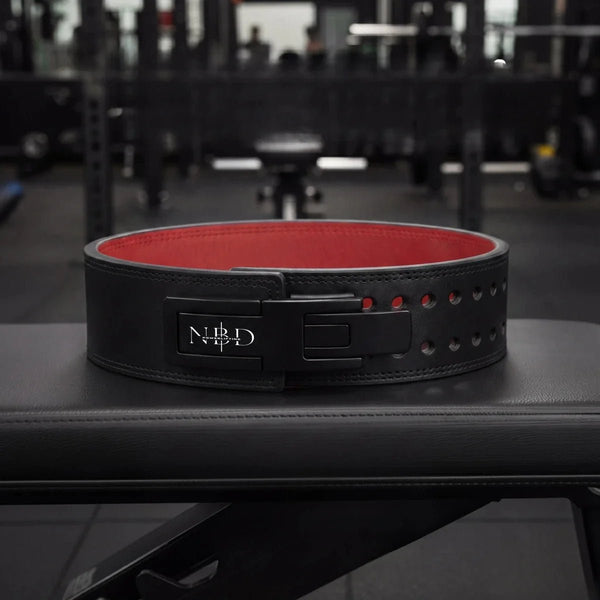 NBD Dual Pro Lever Belt (10mm & 13mm)Weightlifting Belt
View product
NBD Dual Pro Lever Belt (10mm & 13mm)Weightlifting Belt
View product
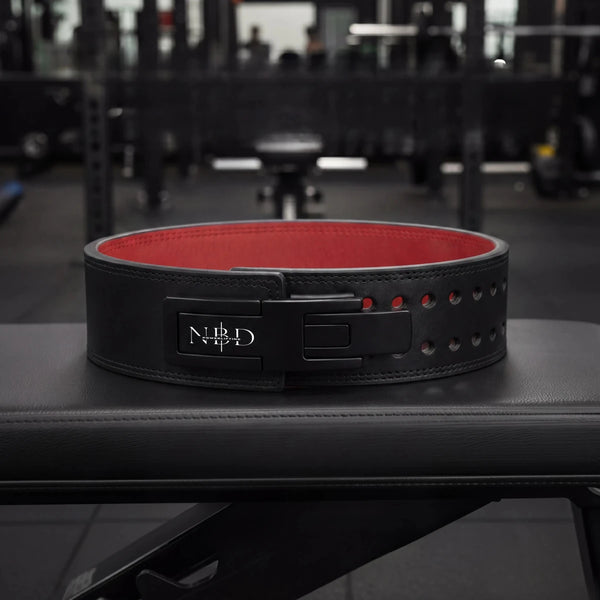 NBD 13mm Dual Pro Lever Belt – Elite Powerlifting Belt | Premium LeatherPowerlifting Belt
View product
NBD 13mm Dual Pro Lever Belt – Elite Powerlifting Belt | Premium LeatherPowerlifting Belt
View product
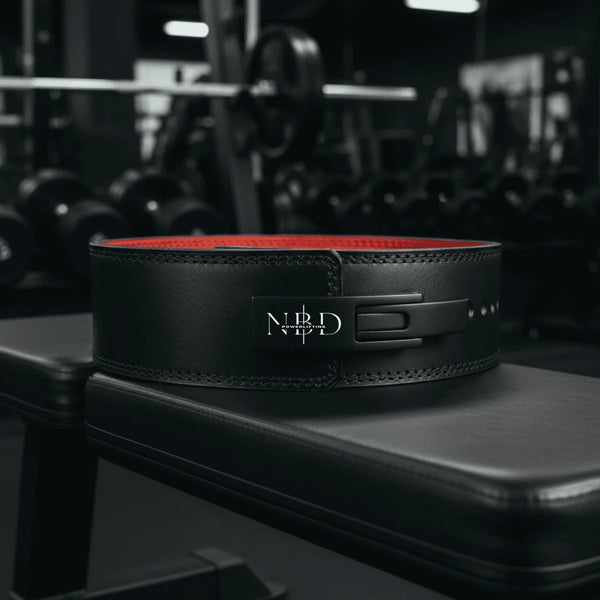 NBD 10mm Lever Belt – Premium Leather | Choose from all Classic, Dual Pro, Gold Lever VariantsPowerlifting Belt
View product
NBD 13mm Lever Belt – Premium Leather | Choose from all Classic, Dual Pro, Gold Lever VariantsPowerlifting Belt
View product
NBD 10mm Lever Belt – Premium Leather | Choose from all Classic, Dual Pro, Gold Lever VariantsPowerlifting Belt
View product
NBD 13mm Lever Belt – Premium Leather | Choose from all Classic, Dual Pro, Gold Lever VariantsPowerlifting Belt
View product
READY TO GEAR UP?
Shop India's most trusted powerlifting equipment — built for serious lifters.