

Why a Coach Reviewing Your Lift on Video Catches What You Can't Feel
What a coach actually looks for in a video form check, and why the same fault feels invisible from inside your own lift. How NBD's assessment works.
A lift that feels perfect can still be leaking depth, letting your knees drift, or shifting load from your hips to your lower back — and you often can't tell, because you're feeling the rep from the inside while a coach is watching it happen from the outside. That gap between what a lift feels like and what it actually does is the entire reason video form review exists.

Why your own sense of a lift can't be fully trusted
Every lifter builds a mental picture of what a "good rep" feels like — a certain tightness, a certain speed, a certain sense of control. The problem is that this feeling is built from the inside of your own body, under fatigue, adrenaline, and whatever cue you were focused on that set. It is not a measurement. Two reps that feel identical to you can look completely different on camera — one hitting depth cleanly, the other stopping an inch short because your hips were tired and your brain didn't register the difference.
This isn't a coordination problem or a beginner problem. Experienced lifters develop the same blind spots, because a pattern you've grooved for years stops sending you new information — it just feels "normal," fault included. That's precisely why even competitive lifters with a decade of training still get their lifts reviewed by someone else's eyes.
What a coach's eye catches that yours can't
Squat depth and knee tracking
From behind the bar, it's hard to judge your own depth against the actual joint angle at your hip — you're relying on a feel that fatigue and adrenaline distort. A coach watching from the side sees the crease of your hip relative to your knee in real time, and can catch a knee drifting inward under load long before it becomes a habit that's expensive to unlearn.
Bar path on the bench
A bar that drifts forward toward your face or wanders off a straight vertical line is nearly impossible to feel while you're under it — your attention is on the weight, not the path. On video, the drift is obvious in the first rep.
Hip vs. back angle on the deadlift
The difference between hips driving a deadlift and a lower back taking over is a matter of a few degrees of angle at the point the bar leaves the floor. Lifters who round early almost never feel it happening — they feel the weight moving, which isn't the same thing as feeling how it's moving.
Why filming yourself isn't the same as having it reviewed
Recording your own sets solves half the problem. You get the footage — but you're still the one interpreting it, with the same blind spots that stopped you from feeling the fault in the first place. A lifter who doesn't know what a caved knee looks like on camera can watch the clip back ten times and still miss it, because they're checking the footage against the same internal picture that was wrong to begin with. The value of a coach isn't the camera. It's a second, trained set of eyes that isn't relying on how the rep felt.
What NBD's strength assessment actually looks at
An NBD strength assessment starts with your current lifts on video, reviewed by a coach against a standard checklist — depth, bar path, joint angles, and where in the rep a lift breaks down, if it does. From there, the assessment turns into a starting point: where your technique is solid, where it's costing you weight on the bar, and what a structured block of coaching would actually need to address first. It's built to answer one practical question — what happens if you keep training exactly as you are now — before recommending anything.
Pairing a form review with how you already track training
A video review answers what your body is doing; tools like RPE and RIR answer how hard that rep actually was. The two are complementary, not competing — a coach reviewing your form is also reading it against how much you had left in the tank, because a knee that caves on a genuinely maximal single is a different finding than the same fault on a rep you had five more in you for.
When a video review is enough, and when it isn't
A form review is a training tool, not a medical evaluation. It can flag a movement pattern that's likely to cause a problem down the line — a chronically caved knee, a back that rounds under every heavy pull — so it can be corrected before it does. It cannot diagnose pain, and it isn't a substitute for seeing a doctor or physiotherapist about an existing injury. If a lift hurts, that's a medical question first and a technique question second.
If you're just starting out and don't yet own a belt, sleeves or wraps, choosing your first powerlifting kit is worth reading alongside this — the right support gear doesn't fix technique, but the wrong gear can mask a fault a coach would otherwise catch.
FAQ
What does a video form check actually catch that I can't feel myself?
Things measured against a fixed external reference — hip depth relative to your knee, bar path relative to a straight vertical line, the exact point a back starts to round. These are angles and positions, not sensations, so they're often invisible from inside the lift even when they've become a settled habit.
Isn't filming my own lifts the same thing?
Not quite. A camera gives you footage, but you still interpret it using the same internal sense of "normal" that missed the fault in the first place. A second, trained set of eyes reviewing the footage against a fixed checklist catches what a lifter reviewing their own clips usually can't.
Do I need to already be experienced before getting my form reviewed?
No — if anything, catching a fault early is cheaper than unlearning a habit that's been grooved for years under heavier weight. Beginners and advanced lifters get value from the same review; only what it's checking for tends to shift as the weights get heavier.
What does NBD's strength assessment actually involve?
A coach reviews your current lifts on video against a standard technique checklist, then turns that into a starting point — what's solid, what's likely costing you weight on the bar, and what a structured training block should address first, before any programming is written.
Can a video review fix pain I'm already dealing with?
No. A form review can flag a movement pattern that's likely to become a problem, but it isn't a medical evaluation and can't diagnose the cause of existing pain. If a lift hurts, see a doctor or physiotherapist first — technique correction comes after that, not instead of it.
How often should a lifter get their form reviewed?
There's no fixed interval — the useful trigger is a change, not a calendar. A jump in training weight, a new exercise variation, or a plateau that won't move are all good reasons to have a lift looked at again, since any of them can quietly change how a pattern breaks down under load.
Prepaid orders ship free across India. Cash on Delivery is available across serviceable pin codes at an extra charge over prepaid — the delivery charge is shown at checkout.
NBD Powerlifting is an Indian manufacturer of competition-grade powerlifting equipment — lever belts, knee sleeves, wrist wraps and lifting straps — serving 15,500+ lifters across India. Written by Karman Singh, who founded NBD in Sirsa, Haryana in 2014.
Built and shipped from India, for lifters who never back down.
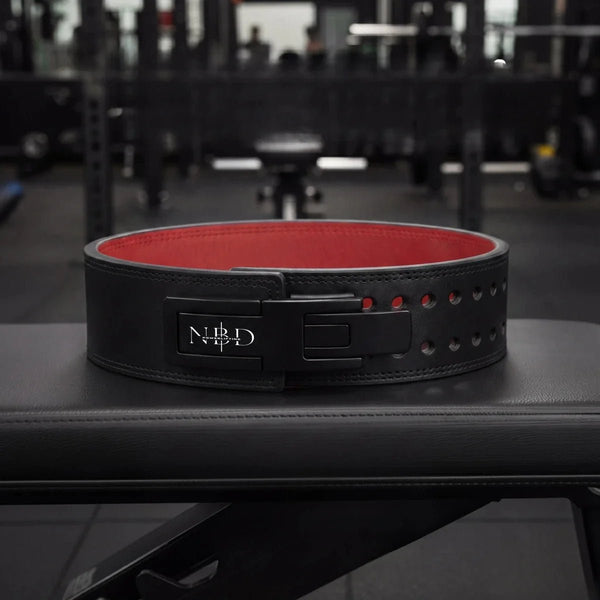 NBD Dual Pro Lever Belt (10mm & 13mm)Weightlifting Belt
View product
NBD Dual Pro Lever Belt (10mm & 13mm)Weightlifting Belt
View product
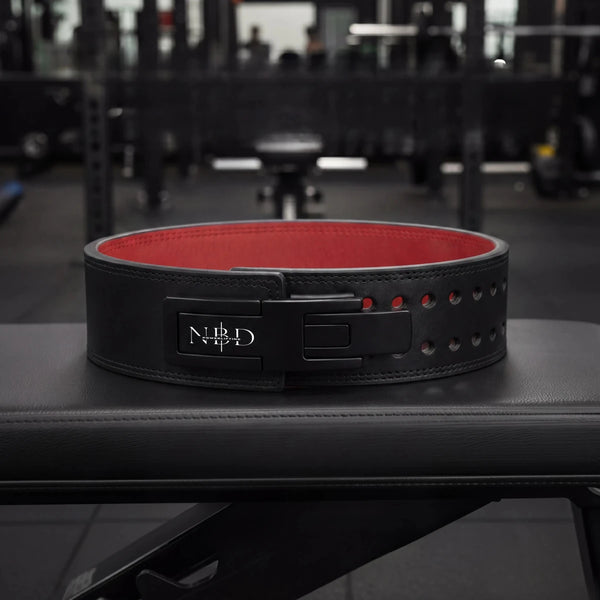 NBD 13mm Dual Pro Lever Belt – Elite Powerlifting Belt | Premium LeatherPowerlifting Belt
View product
NBD 13mm Dual Pro Lever Belt – Elite Powerlifting Belt | Premium LeatherPowerlifting Belt
View product
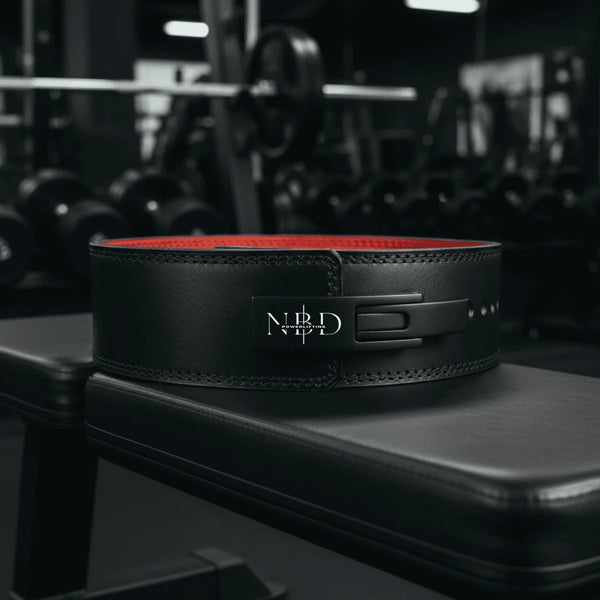 NBD 10mm Lever Belt – Premium Leather | Choose from all Classic, Dual Pro, Gold Lever VariantsPowerlifting Belt
View product
NBD 13mm Lever Belt – Premium Leather | Choose from all Classic, Dual Pro, Gold Lever VariantsPowerlifting Belt
View product
NBD 10mm Lever Belt – Premium Leather | Choose from all Classic, Dual Pro, Gold Lever VariantsPowerlifting Belt
View product
NBD 13mm Lever Belt – Premium Leather | Choose from all Classic, Dual Pro, Gold Lever VariantsPowerlifting Belt
View product
READY TO GEAR UP?
Shop India's most trusted powerlifting equipment — built for serious lifters.