Most lifters buy knee sleeves once, buy them a size too big, and conclude that knee sleeves do not work. They work. The problem is almost never the pair — it is the thickness choice and the fit. This guide covers both properly, tells you what the 7mm and 30cm numbers in every product listing actually mean, and is honest about which lifters should not buy 7mm at all.
What Actually Matters in a Knee Sleeve
Strip away the marketing and there are four things worth judging a pair on. Everything else is packaging.
- Neoprene density. Two sleeves can both say "7mm" and feel completely different. Dense, high-grade neoprene is stiff out of the packet and stays springy for years. Cheap foam-backed neoprene feels comfortable on day one — which is the warning sign — and goes slack within a couple of months.
- Thickness. 7mm is the powerlifting standard and the maximum thickness IPF rules permit. 5mm is thinner, more mobile and better suited to mixed training. This is a genuine fork in the road, not a good-better choice.
- Length. 30cm is the maximum permitted under IPF rules, and it is also the length that gives full coverage above and below the patella on a full-depth squat. A short sleeve rides and exposes the joint at the bottom of the rep — where you need it most. Several sleeves sold in India run 27–28cm.
- Stitching. Reinforced seams are what stops a sleeve splitting when you fight it on. This is the first thing to fail on a cheap pair.
Notice what is not on that list: brand logos, colour options, and claimed kilo gains. If a brand tells you their sleeves add "5–10kg to your squat", they measured nothing. Treat it accordingly.
5mm vs 7mm Knee Sleeves — Pick the Right Fork
This is the decision that determines whether you are happy with your purchase, and most buying guides get it wrong by treating 7mm as simply the better option. It is the more specialised option.
| Factor | 5mm | 7mm |
|---|---|---|
| Compression | Light to moderate | Firm — powerlifting standard |
| Rebound out of the hole | Minimal | Noticeable and consistent |
| Joint warmth | Moderate | High — warm from set one |
| Mobility for conditioning | Good — wear all session | Restrictive by design |
| Getting them on | Straightforward | A fight for the first few sessions |
| Best for | Mixed training, high reps, conditioning | Heavy squats, strength blocks, meet prep |
The honest version: if you squat twice a week at moderate loads and also run, cycle or do conditioning, 5mm is the more useful purchase and costs considerably less. Buy 7mm because you are chasing a squat number, not because it is the thicker option on the page.
Read the full 5mm vs 7mm breakdown →
The NBD Knee Sleeve Range
Three options, built for three genuinely different jobs. All are sold as a pair — left and right — and ship free across India.
MOST POPULAR — 7MM

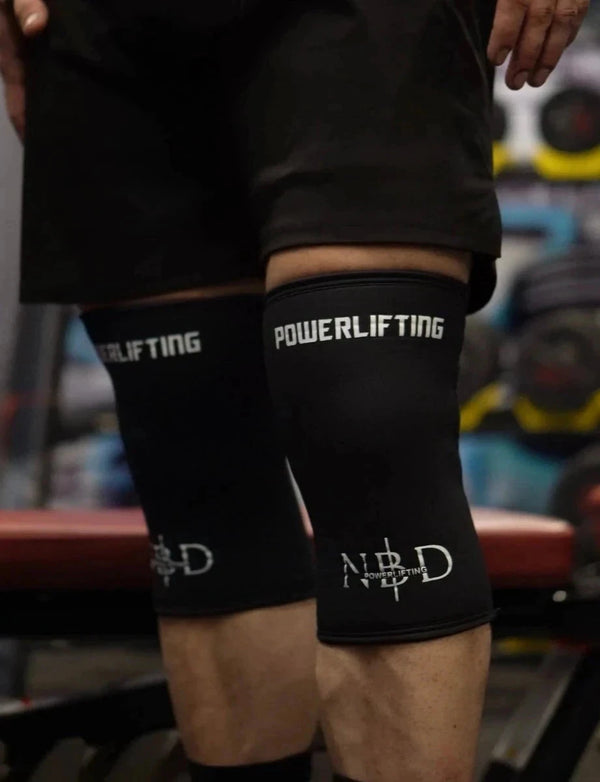
NBD Knee Sleeves 7mm
The default recommendation for anyone squatting heavy. Dense 7mm neoprene, 30cm length, firm compression that holds up across a full training block. Sizes S–XL.
Shop 7mm Sleeves →MAXIMUM SUPPORT — 7MM PRO

NBD PRO 7mm Knee Sleeves
Same 7mm standard, reinforced construction for lifters living in the top end of their squat. For meet prep and peaking blocks where the sleeve gets used hard, every session. Sizes S–XL.
Shop PRO 7mm →MIXED TRAINING

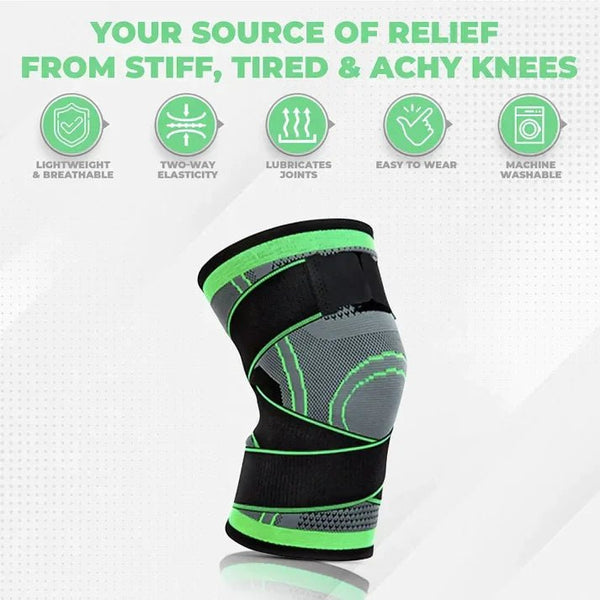
Compression Knee Sleeves with Straps
Lighter compression with embracing straps for an adjustable fit. Easy on and off, comfortable for a full session of mixed work. Sizes S–2XL, available single or as a pair.
Shop Compression Sleeves →Sizing — Where Most of the Money Gets Wasted
A knee sleeve is a compression garment. Compression is the product. Everything you are buying it for — joint warmth, stability under load, rebound out of the bottom of a squat — comes from the sleeve gripping your leg tightly. Size up for comfort and you have bought an expensive knee warmer.
Take two measurements, standing, leg straight and relaxed:
- Kneecap circumference. Soft tape, straight around the centre of the kneecap, kept level rather than angled.
- Calf circumference. Around the thickest part of the calf.
Match against the size chart on the product page and take the larger constraint of the two. Lifters with well-developed calves are frequently limited by the calf measurement rather than the knee — that is normal and it is not a sign you measured wrong.
Two mistakes that ruin the measurement: measuring with the knee bent, and flexing the quad while you measure. Both inflate the number and push you a size too large.
What a correct 7mm fit feels like: a genuine fight to pull on for the first three to five sessions. Roll them into a doughnut, work them up over the knee, and briefly wonder whether you ordered wrong. Once seated they should feel firm and slightly restrictive when you bend the knee. Neoprene relaxes marginally with use, so a pair that slides on easily on day one will be loose inside a month. Between two sizes, size down — provided the calf measurement allows it.
Full knee sleeve sizing guide, including the two-measurement method →
What the IPF 7mm and 30cm Rules Actually Mean
Under current IPF rules, a knee sleeve may not exceed 7mm in thickness or 30cm in length. That is why every serious powerlifting sleeve on the market converges on exactly those two numbers — they are the ceiling, and there is no reason to build under it.
NBD sleeves are built to that dimensional specification: 7mm dense neoprene, 30cm length. Worth being precise about what that does and does not mean. Meeting the dimensional specification is not the same as appearing on a federation's approved-equipment register, and NBD is not currently listed on one. Federations update those lists periodically and each runs its own. Before meet day, check the current rulebook and equipment list for your specific federation — that advice holds regardless of whose sleeves you buy.
Any brand telling you their gear is blanket "approved by every federation" is either not reading the rulebooks or hoping you will not.
Knee Sleeves or Knee Wraps?
Different tools, constantly confused, and buying the wrong one is an expensive mistake.
- Knee sleeves are for training. Pull them on once and they keep the joint warm, compressed and supported through every set of the session. This is what the overwhelming majority of lifters need, and what you should buy first.
- Knee wraps are for peaking and meet day. Wound tight immediately before one specific heavy attempt, then unwound between sets because you physically cannot leave them on. Maximum rebound, maximum support, minimum comfort.
If this is your first piece of knee support, buy sleeves. Add knee wraps when you start competing or chasing a maximal squat in an equipped division.
How to Actually Use Them
- Roll before you pull. Roll the sleeve into a doughnut, start it over the foot and unroll it up the shin and over the knee. Trying to drag a flat 7mm sleeve straight up the leg is how seams get torn.
- Centre it on the patella. A sleeve sitting too high or too low does not support the joint through the bottom of the squat, which is the only part of the rep that matters here.
- Put them on before your working sets, not your warm-up. Let the knee warm up naturally first, then add compression for the loads that need it.
- Take them off between exercises if you are training for an hour-plus. Sustained heavy compression across a two-hour session is unnecessary and uncomfortable.
Care — This Is Where Sleeves Die
Hand wash only, cold water, mild soap, air dry away from direct heat. Never a washing machine, never a tumble dryer. High heat permanently destroys neoprene's compression, and once it is gone it does not come back — you cannot wash a dead sleeve back to life.
The other habit worth building: do not leave them balled up damp in a gym bag between sessions. Turn them inside out and let them air. In Indian humidity that single habit is worth an extra year on a pair, and it is the difference between sleeves that smell and sleeves that do not.
When to Replace Them
A well-cared-for 7mm pair lasts roughly one to three years of consistent training. Replace them when:
- They slide on with no resistance
- The neoprene feels soft and floppy rather than springy
- Seams start separating, or the sleeve has visibly stretched out of shape
A sleeve that has lost its compression is not supporting anything, however new it looks. If you cannot remember the last time getting them on was hard, they are done.
Buying Knee Sleeves in India — What Changed
For years the only serious 7mm sleeves available to Indian lifters were imports, which meant international pricing plus shipping plus duty, a multi-week wait, and no realistic path to a return or exchange if the size was wrong. A lot of Indian lifters ended up training in sleeves that did not fit because sending them back was not worth the effort.
That is the gap NBD was built to close. We manufacture our own gear, which means competition-specification construction — 7mm dense neoprene, 30cm length, reinforced stitching — without the import markup, with pan-India shipping, cash on delivery, and a team you can message on WhatsApp with your measurements before you order. More than 15,500 lifters across India now train in NBD gear.
Frequently Asked Questions
What are the best knee sleeves for squats in India?
For heavy squatting, the standard answer is a dense 7mm neoprene sleeve cut to 30cm length and sized tight. That specification is what the IPF rulebook permits and what most serious powerlifters train in. Thinner 5mm sleeves are the better buy if you train mixed sessions, run or do conditioning alongside lifting. What matters far more than brand is that the pair is genuinely dense neoprene and that you sized it correctly.
Should I buy 5mm or 7mm knee sleeves?
Buy 7mm if heavy squatting is the priority — stiffer, warmer, real elastic rebound out of the bottom. Buy 5mm if you train mixed sessions, do higher-rep work, run or cycle, and want joint warmth without the stiffness. 7mm is not simply better; it is more specialised. Full comparison here.
How tight should knee sleeves be?
Tight enough that pulling them on is a genuine fight for the first three to five sessions. Compression is the entire product. If a sleeve slides on with no resistance it keeps the knee slightly warm and does nothing else. Between two sizes, size down, provided your calf measurement allows it.
Are 7mm knee sleeves allowed in powerlifting competition?
Under current IPF rules, 7mm is the maximum permitted thickness and the sleeve must not exceed 30cm in length. NBD sleeves are built to that dimensional specification. Federations also maintain their own approved-equipment registers and NBD is not currently listed on one — always confirm the current rulebook and equipment list of your specific federation before meet day.
How long do knee sleeves last?
Roughly one to three years of consistent training if you hand wash them cold and air dry them away from heat. Replace them when they slide on with no resistance, when the neoprene feels soft rather than springy, or when seams begin separating.
Knee sleeves or knee wraps — which do I need?
Sleeves are for training and support every set of the session. Wraps are for meet day and heavy singles, wound tight for one attempt then unwound. If this is your first piece of knee support, buy sleeves.
Can beginners use knee sleeves?
Yes. Unlike a belt, sleeves need no technique to benefit from — you put them on and they support the joint from the first rep. Many lifters buy sleeves before a belt for exactly that reason. Building your first setup? See our guide to choosing your first powerlifting kit.
Do knee sleeves add weight to your squat?
A dense 7mm sleeve gives a small amount of elastic rebound out of the bottom, and most lifters report more confidence and consistency rather than a dramatic jump in numbers. Be sceptical of any brand quoting a specific kilo figure — that number is marketing, not measurement. The honest case for sleeves is joint warmth, stability, and being able to train heavy more often.
Protect the Squat You Worked For
7mm dense neoprene. 30cm competition-specification length. Sized to actually compress. Free pan-India shipping and COD available.
SHOP NBD KNEE SLEEVES →Related reading: 5mm vs 7mm knee sleeves · Knee sleeve size guide · Choosing your first powerlifting kit · Best powerlifting belt in India 2026