

Your Gym's Smallest Plate Is 2.5 kg: How to Keep Progressing
Your gym's smallest plate is 2.5 kg, so every barbell jump is 5 kg. How to keep progressing anyway: double progression, extra sets, RIR, tempo and pauses.
If your gym's smallest plate is 2.5 kg, the smallest jump you can make on a barbell is 5 kg — one plate on each side — so the answer to how to keep progressing is to add reps before you add weight: stay at a load until every set reaches the top of a rep range, then take the 5 kg jump and build the reps back up. That method is called double progression, and together with an extra set, steady reps in reserve, a slower tempo, pauses and a smarter choice of variation, it keeps a lift moving in a gym that will never have smaller plates.
If that describes your gym — a rack of 20s, 15s, 10s, 5s and 2.5s and nothing lighter — much of the advice written for this problem will not help, because it starts by telling you to buy fractional plates. This page assumes you cannot, and works only with what is already on the rack.

Why the 2.5 kg plate makes every jump 5 kg
A barbell has to be loaded evenly, so the smallest change you can make is one of the smallest plates on each side: 5 kg. Whether that is a small step or a wall depends entirely on how much is already on the bar.
- On a 140 kg deadlift, 5 kg is about 3.6 per cent of the load.
- On a 60 kg bench press, it is about 8.3 per cent.
- On a 40 kg overhead press, it is 12.5 per cent.
Same plates, very different jumps. That is why the problem shows up first on the bench press and the overhead press, and first for anyone whose working weights are still light. The squat and deadlift, carrying more weight, can usually absorb 5 kg jumps for much longer.

It also explains a pattern many lifters recognise. In the first months, adding 5 kg every week or two felt easy — what actually changes in your first three months of training covers why progress arrives quickly at the start. Then, one day, it stopped. The plate did not change; your rate of progress did, and a fixed 5 kg step is now bigger than one session's worth of improvement.
The fix is neither forcing the jump nor sitting at one weight doing the same thing for months. It is progressing in units smaller than 5 kg that your logbook can measure even though the plate rack cannot: reps, sets and effort.
Double progression: add reps before you add weight
Double progression means progressing two things, in order. First reps, at a fixed weight, inside a rep range. Then weight, once the reps reach the top of the range — at which point the reps fall back and the cycle starts again.
How to run it:
- Pick a rep range for the lift — for example, six to ten reps on the bench press.
- Choose a starting weight you can lift for at least the bottom of the range on every set, with a rep or two still in the tank.
- Each session, try to add a rep to at least one set, at the same weight.
- When every set reaches the top of the range with the same technique, add 5 kg next session.
- Expect the reps to fall back towards the bottom of the range at the new weight. That is the system working. Start climbing again.
A worked example — bench press, three sets of six to ten at 60 kg. The numbers are illustrative; real logs are rarely this tidy.
- Session 1: 60 kg × 8, 7, 6
- Session 2: 60 kg × 8, 8, 7
- Session 3: 60 kg × 9, 8, 8
- Session 4: 60 kg × 10, 9, 8
- Session 5: 60 kg × 10, 10, 9
- Session 6: 60 kg × 10, 10, 10 — next session, 65 kg
- Session 7: 65 kg × 7, 6, 6
Across six sessions the bar never got heavier, and every one of them was a measurable step forward: total reps went 21, 23, 25, 27, 29, 30. That is progressive overload in units of one rep, and one rep is a far smaller step than 5 kg.

Choose the range to fit the jump. The wider the rep range, the more room a 5 kg jump has to land in.
- Where 5 kg is a large share of the bar — the overhead press, a lighter bench press, most accessory lifts — use a wide range, about four reps wide: six to ten, or eight to twelve.
- Where 5 kg is a small share — a heavier squat or deadlift — a narrower, heavier range such as four to six can work, because the jump costs fewer reps.
- If the new weight pushes you below the bottom of the range, the range is too narrow for that lift at that weight. Widen it next time rather than grinding out reps you cannot own.
What the research says about adding reps instead of weight
The usual objection to double progression is that adding reps is not real progress and only weight counts. The most direct test of that objection is a randomised trial published in PeerJ in 2022 by Plotkin, Schoenfeld and colleagues, Progressive overload without progressing load?
- Who: 43 people with at least a year of consistent lower-body training were randomly split into two groups; 38 finished.
- What: both groups did four sets of the back squat, leg extension and two calf raises, twice a week, for eight weeks, with sets taken to or very close to failure.
- The difference: one group added weight while staying in an eight-to-twelve rep range. The other kept its starting weight and added reps instead.
- The result: muscle size increased similarly in most of the thigh and calf sites measured, with one front-thigh muscle, the rectus femoris, modestly favouring the reps group. Squat strength, tested on a Smith machine, slightly favoured the weight group — a difference the authors describe as of questionable practical significance.
The authors conclude that adding reps and adding load both appear to be viable ways to progress over a training block of that length.
What it does not show matters as much. It studied young, trained people, only the thighs and calves, over one short block. Nobody in it bench-pressed, overhead-pressed or deadlifted, or trained in a gym without small plates. Strength leaned slightly towards adding load. And the added reps counted because the sets went to or near failure — adding reps while leaving five in the tank is not what the study did.
The NBD reading: adding reps is a genuine way to progress, especially for building muscle, and not a consolation prize for lifters without small plates. For maximal strength the weight on the bar still has to climb eventually. Double progression gives you both — reps carry you between jumps, and the jump still happens.
Add a set when the reps stall
Sometimes the reps stop climbing a session or two before the top of the range, and the 5 kg jump still looks too big. Before adding weight, add a set: three sets of eight at 60 kg becomes four sets of eight, then four sets of nine, and so on. The extra set adds work at a weight you can already handle well.
Keep it modest. One extra set per lift at a time, and drop back to your usual number of sets when you take the jump. If you are already at five or six hard sets on a lift and the reps still will not move, more sets are not the answer — the problem is recovery or the programme, not the plate.
Use RPE and reps in reserve to see progress the bar cannot show
Same weight, same reps, less effort is progress. If 60 kg for eight left one rep in reserve last month and three today, you are stronger — and it only shows up if you write the effort down next to the reps.
Two tools do this: rating of perceived exertion and reps in reserve. RPE: the tool every serious lifter needs to master explains the scale, and the complete guide to reps in reserve explains how to estimate it honestly. In a gym with 5 kg jumps they do two jobs:
- Tell you when to jump. Take the 5 kg when your top-of-range sets still have a rep or two in reserve — not when you are barely scraping through them.
- Keep the reps honest. A rep added by shortening the range, bouncing or leaning back is not progress. Hold the same technique standard at every weight, or the logbook stops meaning anything.
Micro-loading without small plates: what your gym already has
Micro-loading usually means adding tiny plates. Without them, there are still genuine ways to make a set harder by less than 5 kg:
- Tempo. Lower the bar over three seconds instead of one. Same weight, harder set. Pick a tempo and keep it, so the log stays comparable, then progress reps at that tempo.
- Pauses. A one- or two-second pause on the chest in the bench press, or at the bottom of the squat, removes the bounce and makes the same weight harder. Paused reps at your current weight are a real step up.
- A variation, for a block. Running a paused bench press or a close-grip bench through its own double progression trains the same muscles while the main lift consolidates. The aim is to come back to the main lift with more reps in hand at the old weight.
- Dumbbells and cables — but do the arithmetic. If your rack steps 2.5 kg per dumbbell, moving up one pair is still 5 kg in total, and going from a pair of 12.5 kg dumbbells to 15 kg is a 20 per cent jump — bigger than the barbell's. A cable stack moves in whatever steps its plates weigh. Their value is variety and one-arm work, not automatically smaller jumps; run double progression on them too.
- Your own change plates, if you want them. Some lifters carry their own; ask the gym first. Nothing on this page depends on them.
What not to do: never load a 2.5 kg plate on one side only, and never hang improvised objects off the sleeves. An uneven bar loads one side of your body more than the other and can tip in the hooks — the FAQ below covers it.
Setting it up lift by lift
- Squat. Usually carries enough weight that 5 kg jumps stay workable for a long time. A range such as four to six or five to eight, with double progression and an extra set before a jump if the reps stall.
- Deadlift. Fewer hard sets than the squat. Progress the reps on one heavy top set, keep any back-off sets fixed, and jump when the top set reaches the top of its range.
- Bench press. A wider range — six to ten — plus added sets and paused reps. This is often where lifters first feel the 5 kg problem.
- Overhead press. The hardest lift for 5 kg jumps. Use the widest range, eight to twelve, expect to stay at each weight longer, and treat a whole block at one weight as progress if the reps are rising.
- Rows, pull-downs and accessories. Ten to fifteen reps, dumbbell and cable steps, progressed by reps and effort.
Equipment is not how you get past the plate problem — the reps are. Once your squat and deadlift top sets are heavy enough that bracing is what gives out first, a lifting belt starts to earn its place on those sets, and not before.
When it is not the plate
Double progression only works if the reps are genuinely moving. The plate is no longer your problem when:
- Reps at the same weight have not moved across three or four sessions of that lift, even though you have not taken the jump yet.
- Reps are only rising because form is loosening — a shorter range, more bounce, more lean.
- Most of your lifts are flat, not just the ones with big jumps, and sleep is short or food is light.
- You change programme every couple of weeks, so no lift has a history long enough to read.
Fix recovery, food, the number of hard sets or technique first. A smaller plate would not help.
And if a lift hurts rather than just feels hard, stop progressing it and get it looked at by a qualified professional. This page is training practice, not medical advice — please read the training terms and health disclaimer before acting on anything here.
Progressing in an ordinary Indian commercial gym
- The rack at peak hours. You will not always find two matching 2.5 kg plates, or the rack you wanted. Rep-first progression does not depend on finding exact plates, so plan the session around what the gym has at the time you can actually train.
- Matching pairs, every time. Load the same plates on each side, and use the same bar, bench and hook height where you can, so a number in the log means the same thing each week.
- Crowded evenings. When the rack is busy, run the same double progression on dumbbells and cables rather than skipping the session.
- A logbook you actually keep. Paper or phone: weight, reps per set and reps in reserve. Without it, rep progression is guesswork.
When a coach is worth it
Most lifters can run double progression on their own with the rules above. Where it goes wrong is judgement, not information: which rep range suits each lift at your weights, whether a stall is the plate or your recovery, and when a variation block would serve you better than grinding the main lift.
That judgement is what Train With NBD is for — science-based programming written for the gym you actually train in, with a real coach reading your log. The first step is the NBD Training Assessment: a written intake covering your goal, your training history, the days you can genuinely train and the equipment your gym has, read by a Level 4 coach on Team NBD, who comes back to you on WhatsApp within 24 hours with a recommended path and the reasoning behind it. It is a review, not a sales call.
FAQ
If the smallest plate is 2.5 kg, what is the smallest jump on a barbell?
Five kilos. A barbell has to be loaded evenly, so the smallest change is one 2.5 kg plate on each side. That is a small step on a heavy squat or deadlift and a large one on a light overhead press, which is why upper-body lifts usually stall first in a gym with nothing smaller on the rack.
Is adding reps as good as adding weight?
For building muscle, a 2022 randomised trial in trained people found that adding reps at a fixed weight produced similar muscle growth to adding weight in most sites measured across an eight-week block, while maximal squat strength slightly favoured the weight group. For strength, the load still has to rise eventually. Double progression uses both: reps between jumps, then the jump.
What is double progression?
A way to progress two things in order. You keep the weight fixed and add reps inside a set range, such as six to ten, until every set reaches the top of the range. Then you add the smallest jump your gym allows, the reps fall back towards the bottom, and you build them up again.
How many reps should I add before I increase the weight?
Add reps until every working set reaches the top of your chosen range with the same technique and a rep or two in reserve. Then make the jump. If the new weight drops you below the bottom of the range, the range is too narrow for that lift at that weight, so widen it next time.
Can I put a 2.5 kg plate on one side only?
No. An unevenly loaded bar puts more load through one side of your body than the other, and it can tip as it leaves or goes back into the hooks. Keep the bar balanced and make the small progress with reps, sets, effort, tempo or pauses instead of with an uneven plate.
Should I buy my own small plates?
Only if you will train in the same gym for a long time and want the convenience, and ask the gym first. They are not a requirement: double progression, an extra set, reps in reserve, tempo and pauses keep a lift progressing with nothing smaller than 2.5 kg on the rack.
If you want the rep ranges, the jumps and the stall rule set for your lifts and your gym rather than for an average, that is what the NBD Training Assessment is for. NBD Powerlifting is an Indian manufacturer of competition-grade powerlifting equipment — lever belts, knee sleeves, wrist wraps and lifting straps — serving 15,500+ lifters across India, and its coaching side works with lifters on fat loss, muscle and strength.
Built and shipped from India, for lifters who never back down.
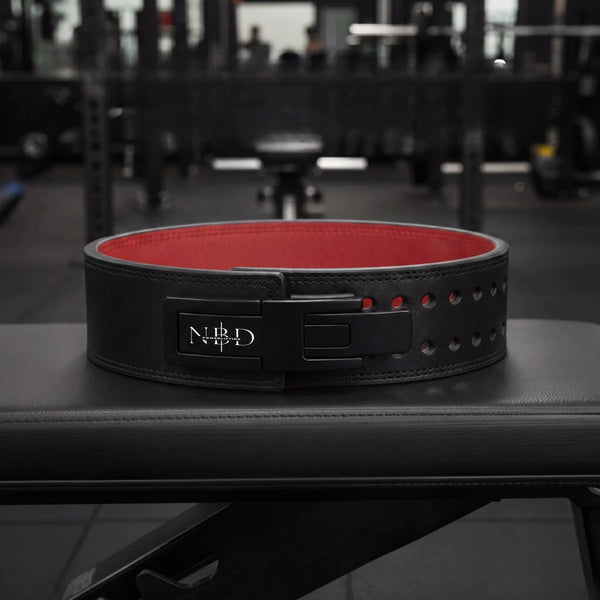 NBD 10mm Dual Pro Lever Belt – Elite Powerlifting Belt | Premium LeatherPowerlifting Belt
View product
NBD 10mm Dual Pro Lever Belt – Elite Powerlifting Belt | Premium LeatherPowerlifting Belt
View product
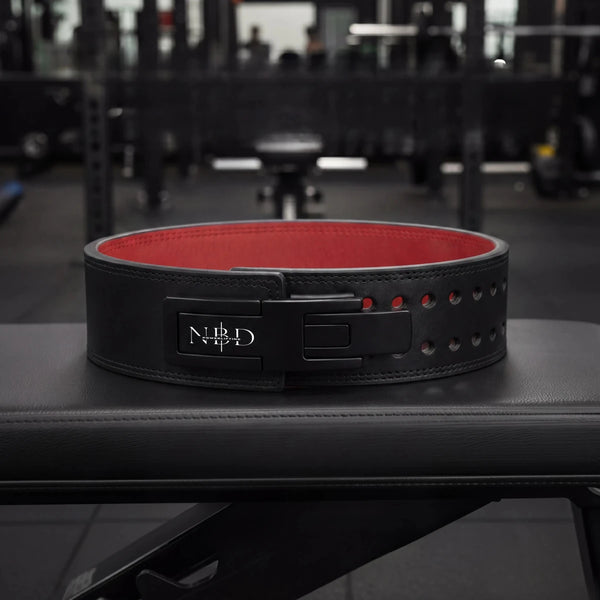 NBD 13mm Dual Pro Lever Belt – Elite Powerlifting Belt | Premium LeatherPowerlifting Belt
View product
NBD 13mm Dual Pro Lever Belt – Elite Powerlifting Belt | Premium LeatherPowerlifting Belt
View product
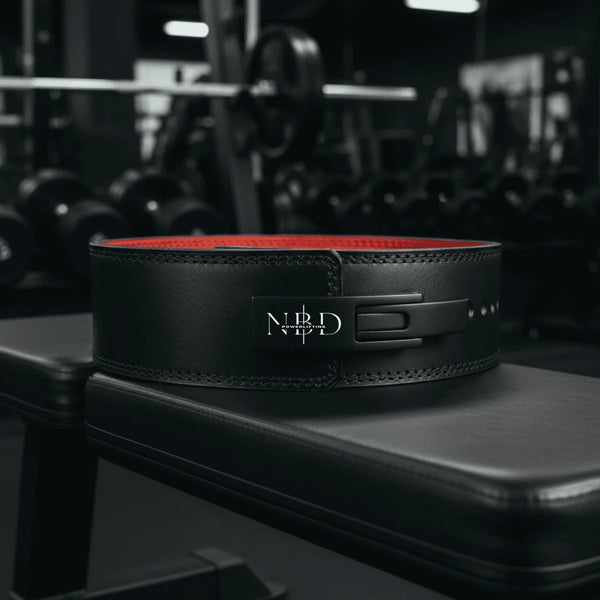 NBD 10mm Lever Belt – Premium Leather | Choose from all Classic, Dual Pro, Gold Lever VariantsPowerlifting Belt
View product
NBD 13mm Lever Belt – Premium Leather | Choose from all Classic, Dual Pro, Gold Lever VariantsPowerlifting Belt
View product
NBD 10mm Lever Belt – Premium Leather | Choose from all Classic, Dual Pro, Gold Lever VariantsPowerlifting Belt
View product
NBD 13mm Lever Belt – Premium Leather | Choose from all Classic, Dual Pro, Gold Lever VariantsPowerlifting Belt
View product
READY TO GEAR UP?
Shop India's most trusted powerlifting equipment — built for serious lifters.